
Last updated November 25, 2026
 Whole-home duct cleaning
 Dryer vent cleaning
 Camera inspection
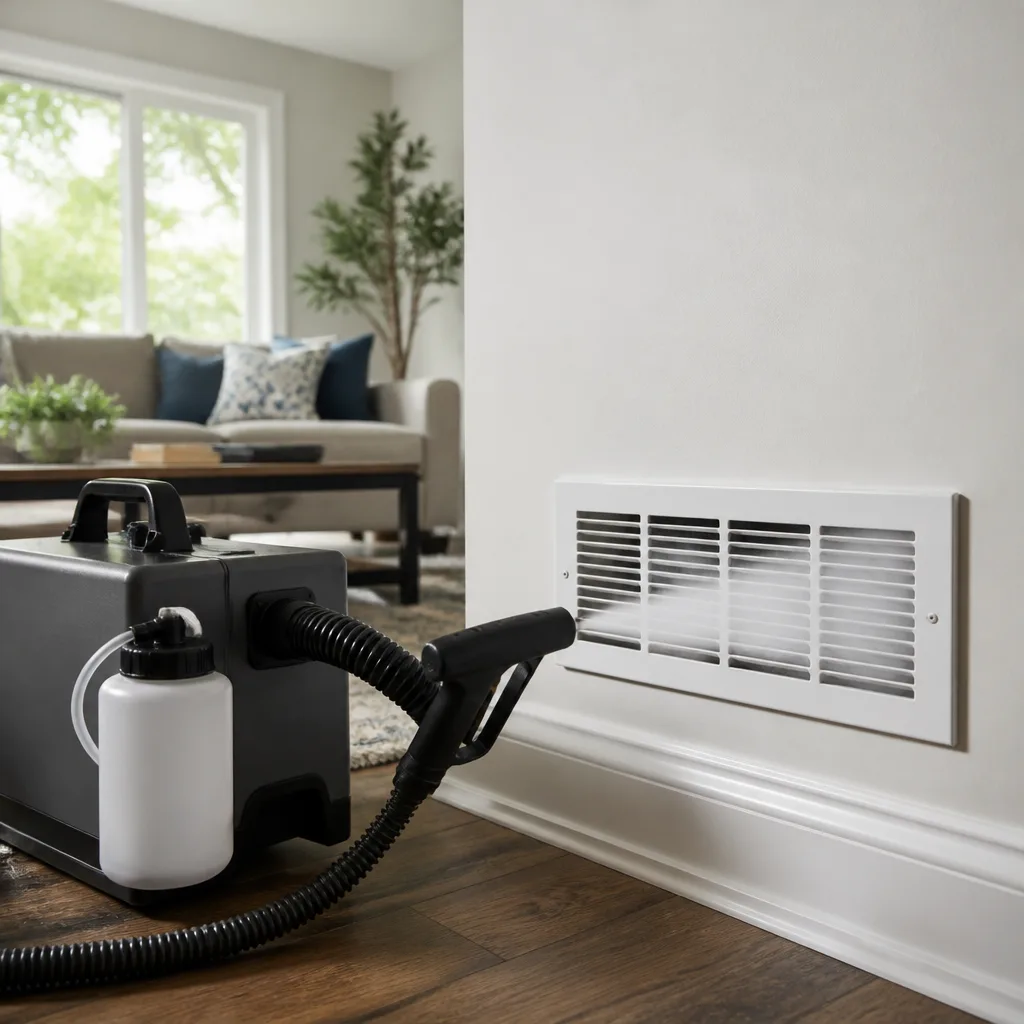 Sanitizing & deodorizing
Whole-system duct and dryer vent check with before-and-after photos - you see exactly what came out of your vents
That "$99 whole-house special" is a bait ad - the real number appears once they are in your hallway, or the "clean" is a shop-vac at the register. We photograph the inside of your ducts before and after instead.
The Complete Guide to Air Duct Cleaning in Mission Viejo
Most homeowners think they know what they’re buying when they pay for air duct cleaning. A technician shows up, runs a vacuum hose through the vents, and leaves. That picture is wrong, and it’s wrong in a way that costs Mission Viejo homeowners real money. A complete job is a sequenced mechanical process – inspection, isolation under negative pressure, agitation, extraction, and post-verification – and every step exists because skipping it leaves contamination where it was. This guide walks through that whole sequence, explains why Mission Viejo’s climate loads duct systems in particular ways, and tells you exactly what documentation to demand before anyone touches your air handler.
Quick Answer
Full air duct cleaning is a five-stage mechanical process, not a single vacuum pass. It starts with a camera inspection, isolates the system under negative pressure, agitates and extracts debris from every branch and the air handler, then verifies results with photo documentation and a checklist. In Mission Viejo, that means addressing supply ducts, return ducts, and the air handler cabinet together, because cleaning only one leaves the others recontaminating the system within weeks.
Styles & brands we work with
- Whole-home duct cleaning
- Dryer vent cleaning
- Camera inspection
- Sanitizing & deodorizing
Table of Contents
- The Five-Stage Sequence: What a Real Cleaning Actually Involves
- Negative-Pressure Source Removal vs. “Blow and Go” Calls
- How Mission Viejo’s Climate Loads Duct Systems
- Supply Ducts, Return Ducts, and the Air Handler Cabinet
- What Photo and Video Documentation You Should Receive
- Reading the Post-Cleaning Verification Checklist
- The Equipment Difference: Why It Matters
- What Air Duct Cleaning Costs in Mission Viejo
The Five-Stage Sequence: What a Real Cleaning Actually Involves
A full cleaning follows a fixed order, and the order cannot be rearranged. Each stage prepares the system for the next, and skipping ahead contaminates work that’s already been completed.
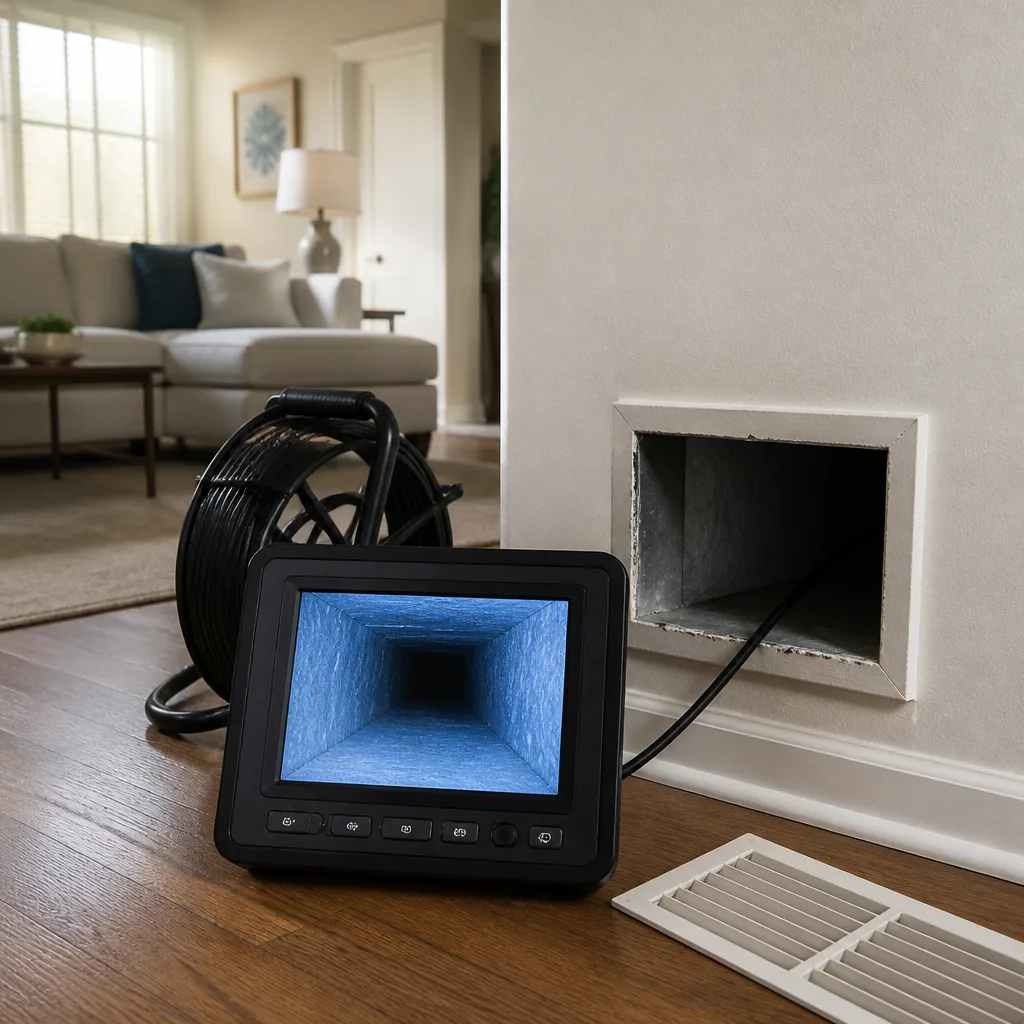
- Inspection. A technician uses a camera or scope to look inside the ducts and the air handler before any equipment is connected. This step establishes a baseline: what’s in the system, where the heaviest deposits are, and whether there are breaches, disconnected joints, or pest intrusion. You should see this footage, or at least hear what was found, before work begins.
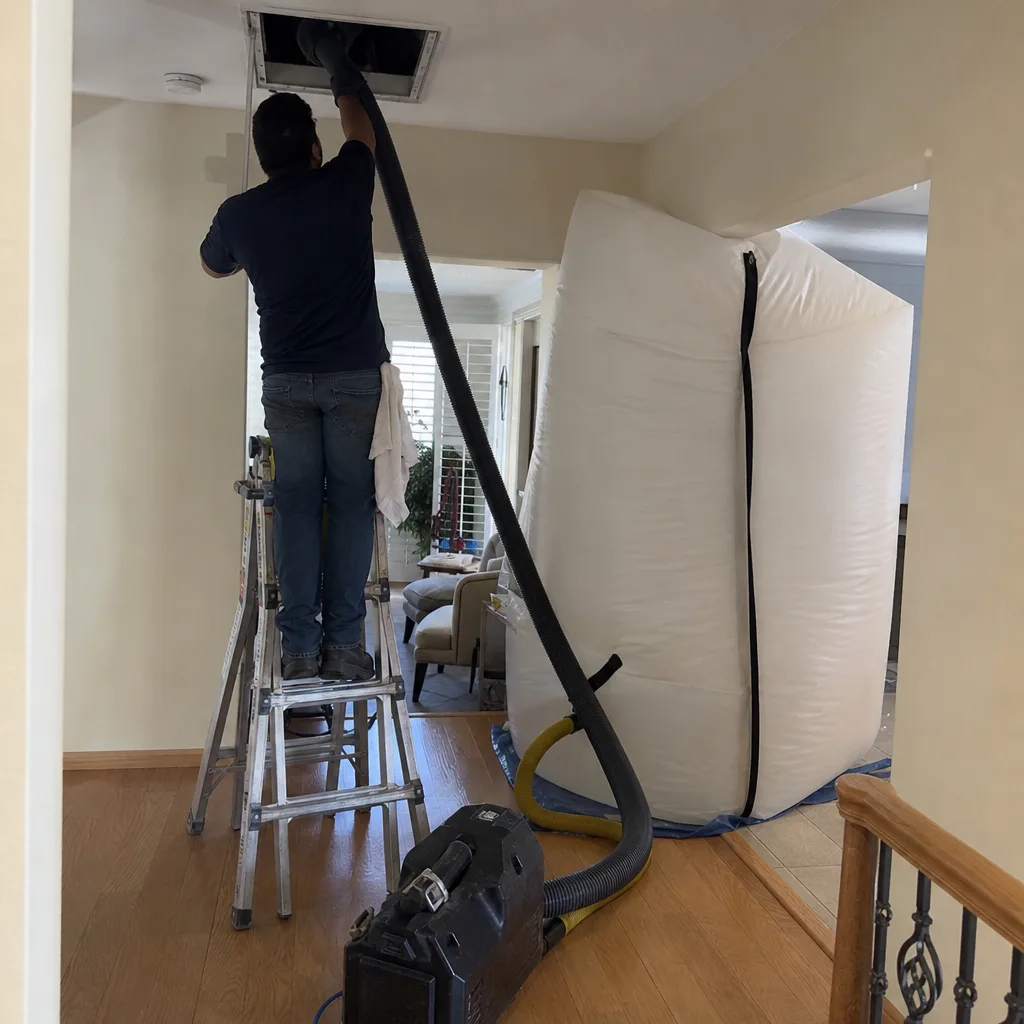
- Isolation under negative pressure. The system is sealed and connected to a high-capacity vacuum unit – the Abatement Technologies filtration and containment equipment we run is built to hold the whole system under negative pressure. This is the difference between removal and redistribution. Without it, agitation just moves debris into rooms.
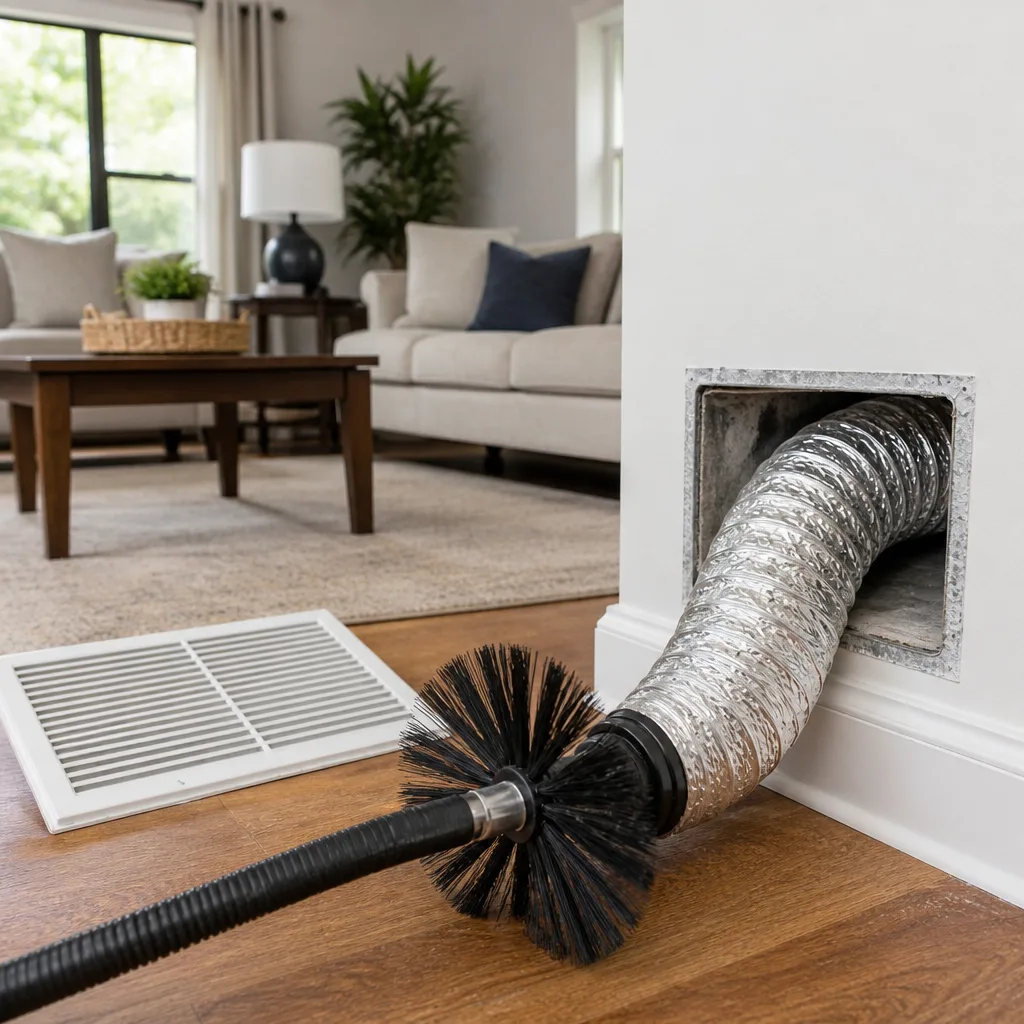
- Agitation. Mechanical brushes and air whips travel through each branch to break debris loose from duct walls. Dust binds to the interior surfaces of flex duct and sheet metal alike, and it doesn’t release to a vacuum alone. Agitation is what frees it.
- Extraction. Loose debris moves into the vacuum and out of the system. Every supply register, return grille, and the air handler cabinet gets pulled into the same pressure envelope, which is why the isolation step comes first.
- Post-verification. After extraction, the technician re-inspects and documents the result. This is where legitimate work separates itself from a service call that ends when the equipment shuts off.
In our experience, the stages homeowners remember are the first and last, because that’s where they get to see something: the pre-cleaning camera footage and the after photos. Everything in between is the machinery doing the job. Understanding the sequence gives you a way to ask questions before anyone starts.
Negative-Pressure Source Removal vs. “Blow and Go” Calls
The phrase “blow and go” describes a service call that connects a shop vacuum or a low-power unit to one or two vents, runs it briefly, and leaves. It looks like duct cleaning. It isn’t, and the difference is mechanical.
True source removal depends on three things working at once: containment, airflow volume, and agitation. A consumer-grade vacuum pulls a fraction of the air volume that a truck-mounted or high-capacity portable system does. It can’t sustain negative pressure across a full residential system, which means it shifts dust from the vent it’s attached to and pushes the rest further into branches and toward the air handler. Agitation without that pressure just spreads deposits instead of capturing them.
This is also where the EPA’s long-standing statement about duct cleaning comes from – the point that cleaning has never been shown to prevent health problems. That finding was written about incomplete cleaning methods, the kind that stir up contamination without capturing it. Full negative-pressure mechanical extraction is a different procedure, and the documentation is what lets you confirm which one you received.
Professional-grade equipment matters here for a practical reason: it’s the equipment that can do a whole system in one visit. We run Rotobrush and Nikro systems – the same gear commercial and industrial contractors use – because residential systems in Mission Viejo are larger than they look, often with long flex runs and multiple return paths. A vacuum built for a garage or a car interior can’t clear that. If you want to compare what proper air duct cleaning includes versus a low-bid visit, the equipment list is usually the first thing that tells you which one you’re being quoted.
How Mission Viejo’s Climate Loads Duct Systems
Mission Viejo sits in a marine-influenced climate – mild winters, warm dry summers, and a marine layer that pushes cooler, damper air inland in the mornings and evenings for much of the year. That pattern loads duct systems in ways inland desert homes never see.
The damp morning air is the first factor. Attic duct runs, especially flex duct in a warm attic, see repeated swings between humid and dry. Condensation forms on cool duct exteriors and around poorly sealed joints, and that moisture feeds dust deposits into something heavier. Homeowners describe the result as a musty or “old house” smell at the registers, strongest when the system first starts in the morning. Cleaning addresses the deposits; sealing addresses the reason the joints stayed damp.
Wildfire ash is the second factor. When smoke from regional fires drifts over south Orange County, fine ash travels with the air mass and gets pulled into return ducts. Ash particles are smaller and more abrasive than household dust, and they lodge deeply in flex duct lining. Windows stay closed during those periods, which means the HVAC system does the ventilation work – and collects the load.
Together, those two conditions mean a Mission Viejo home can accumulate a heavier, more damp-bound deposit than a home of the same age inland. In practice, that’s why we recommend an inspection at roughly the same intervals you’d use for an inland home, but with attention to moisture and odor rather than just visible dust. The local layer matters more than the calendar.
Supply Ducts, Return Ducts, and the Air Handler Cabinet
A house has three connected zones in one air loop, and cleaning one without the others defeats the job.
- Supply ducts carry conditioned air from the air handler to each room. These are usually the cleanest purely because air moves through them under positive pressure, but they collect dust on surfaces during off cycles.
- Return ducts carry room air back to the air handler. These collect the heaviest debris because they pull from living space at low velocity. If only one part of a system gets attention, this is the one that needs it.
- The air handler cabinet houses the blower, the evaporator coil, and the filter. Debris that reaches this cabinet coats the coil, and a fouled coil cuts system efficiency and can produce the musty smell homeowners mistake for ducts alone.
Think of it as one loop. Debris left in the return is pulled through the cabinet and pushed back into the supply side on the next cycle. Debris left in the cabinet coats the coil and enters every duct downstream. Leave any one zone out and the system recontaminates itself within weeks, which is why we clean all three together and why a quote that addresses “the vents” only is worth questioning. When the coil and cabinet are contaminated, cleaning and HVAC cleaning need to happen as one job, not two visits from different companies.
What Photo and Video Documentation You Should Receive
Documentation is the honest answer to the biggest worry in this trade: how do you know the work was actually done? A legitimate technician should hand you visual evidence of both conditions – before and after – for every zone they touched.
Specifically, ask for:
- Pre-cleaning photos or video of the air handler interior, at least one return run, and a sample of supply branches. Ask to see them on the technician’s screen before work starts.
- Post-cleaning photos or video of the same locations, from the same angles. Comparing the same view matters more than comparing two unrelated shots.
- A written summary of findings – disconnected joints, moisture, pest evidence, damaged flex duct, or filter condition – with recommendations for anything that needs repair.
- A verification checklist covering each zone addressed, with the technician’s notes on the result.
Our rule is simple: we show you what we find before we start and after we finish. Homeowners are entitled to that as a standard, not a favor. If a contractor can’t produce before-and-after documentation of the same locations, you have no way to confirm the extraction stage happened at all, and that’s the moment to ask why.
Reading the Post-Cleaning Verification Checklist
A post-cleaning checklist is a record of what was inspected and what was found, and reading it takes two minutes once you know what to look for. It should reference the National Air Duct Cleaners Association (NADCA) standard for assessment, inspection, and cleaning, and it should list each component by name rather than a single line that says “ducts cleaned.”
Look for these items:
- Component-by-component entries. Supply branches, return runs, air handler cabinet, blower, and coil should appear separately, with a condition note on each.
- Pre- and post-condition descriptions. A line that reads “heavy debris, cleared” for a return run tells you something. A checkbox with no note doesn’t.
- Open findings. Disconnected flex duct, failed seals, moisture, or pest evidence should be listed as findings with a recommended next step. A clean checklist with zero findings on an older system is worth a question.
- Photo references. The checklist should tie back to the images you received.
If a contractor doesn’t offer one, ask for it before they start, and if they can’t produce one after the work, treat that as a red flag rather than a technicality. NADCA’s verification guidance exists precisely so that homeowners have a standard to measure against. Our technicians have up to 11 years of experience, and that experience is mostly about knowing what a clean system actually looks like when the light and camera get inside it.
The Equipment Difference: Why It Matters
Equipment is the single easiest thing to check when comparing quotes, because the brand on the machine tells you the class of work you’re paying for. Rotobrush systems are built specifically for residential duct cleaning; Nikro covers the high-capacity vacuum and filtration side; Abatement Technologies equipment is designed for containment and filtration at a standard usually seen in remediation rather than routine maintenance. When a job is handled on that equipment, the whole-house pressure envelope holds and everything in the loop, including the air handler, gets cleaned in one pass.
That same standard carries into what happens after cleaning. If the system needs a filtration upgrade or a humidity control step, we work with Honeywell and Aprilaire equipment, so recommendations run on recognized manufacturer systems rather than generic aftermarket parts. For post-cleaning treatment of duct surfaces, Guardsman-line products are available. There’s no reason to clean a system carefully and then hand you a hardware-store filter that doesn’t match it.
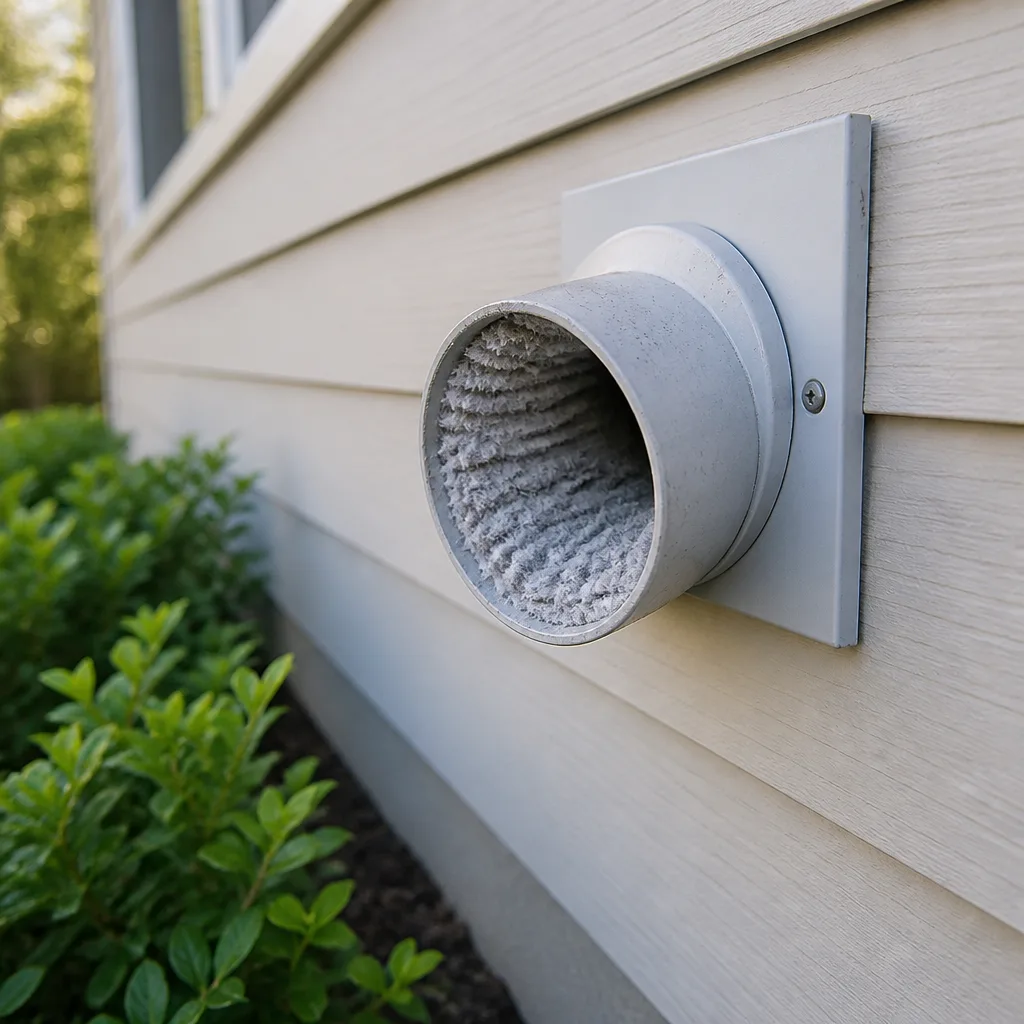
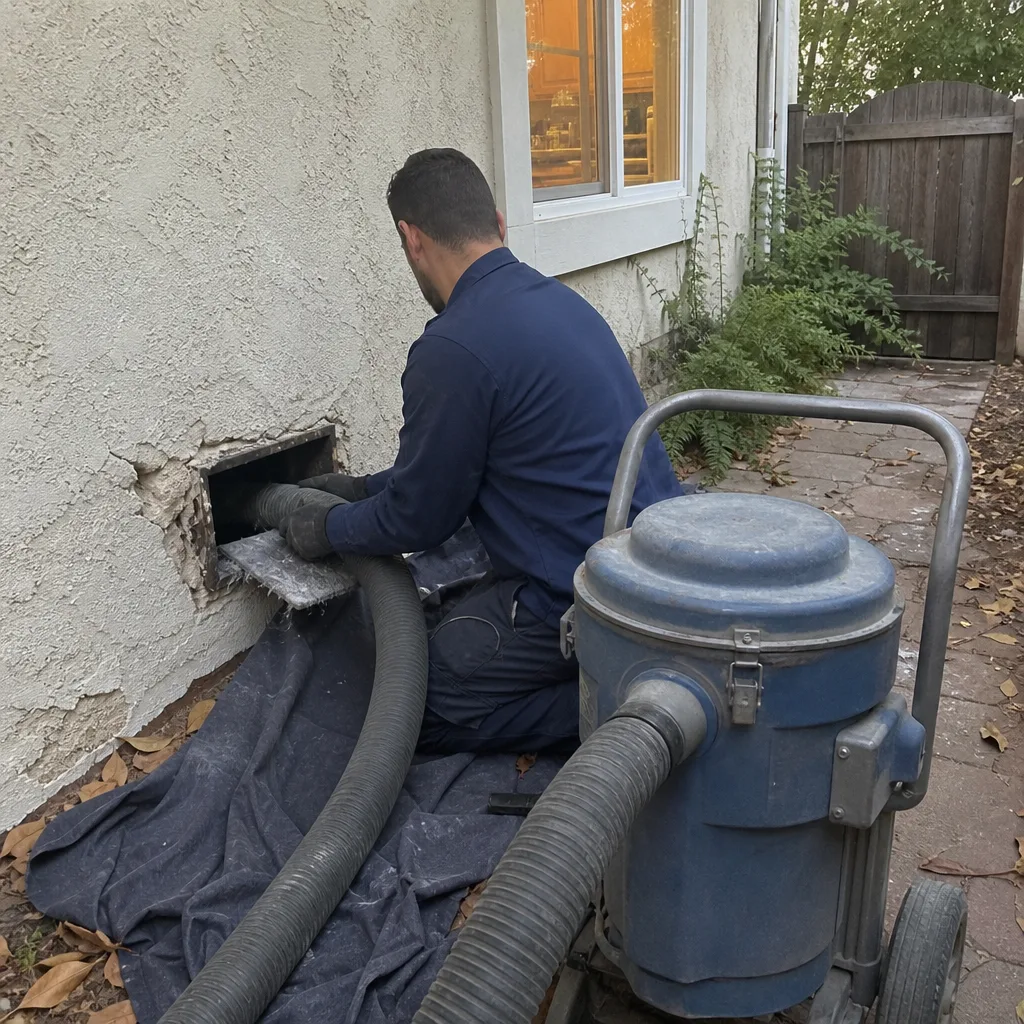
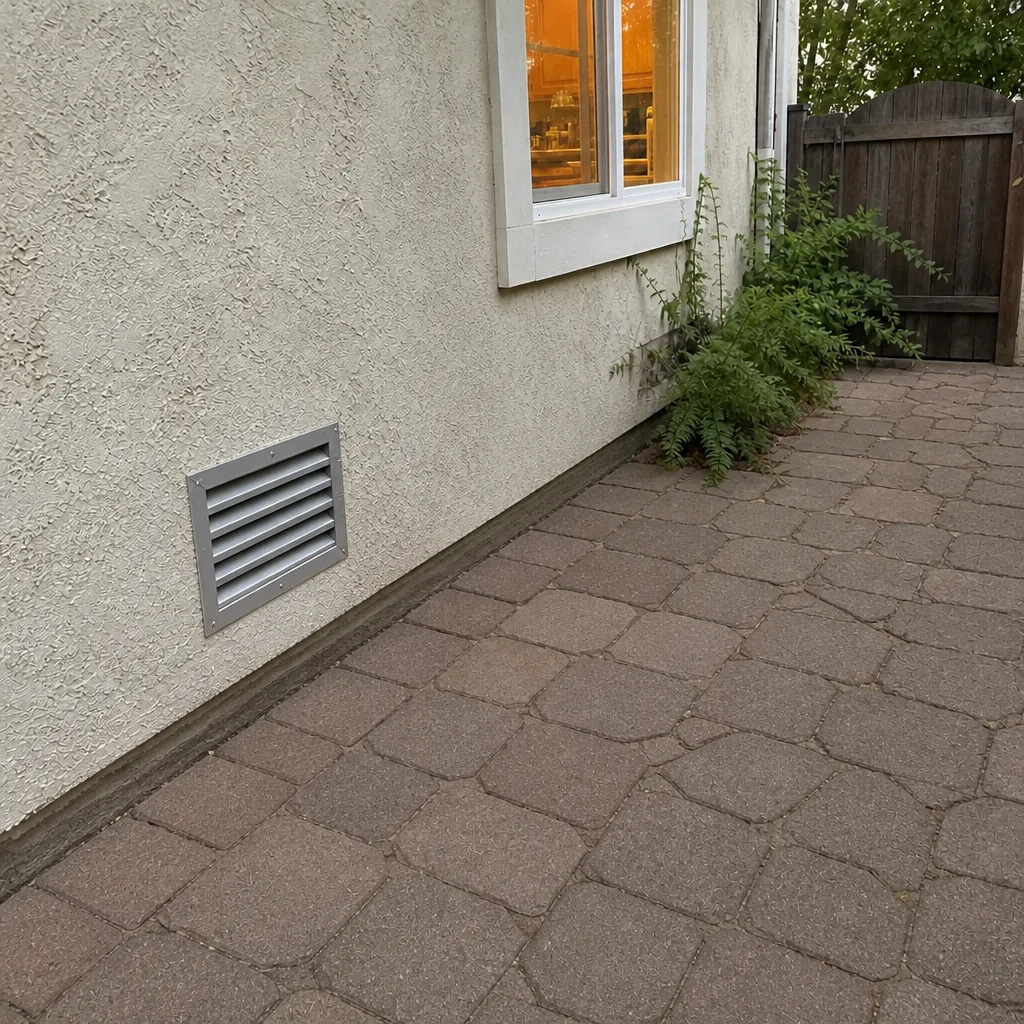
Where that breadth shows most is in dryer vent cleaning. Lint accumulation in a dryer vent is a fire risk, not an air quality issue, and it gets treated as an afterthought by companies that only run duct equipment. We handle it as its own job, with its own method, and it’s often the highest-risk item in a Mission Viejo home’s air and vent systems. Cleaning, dryer vent safety, HVAC system cleaning, duct repair and sealing, and sanitizing are all part of the same house – they shouldn’t come from five different vendors.
What Air Duct Cleaning Costs in Mission Viejo
Cost depends on the size of the system, the number of branches and returns, and whether repair or sealing is included. Homeowners should expect a written, per-system price agreed before any work starts, not a per-vent figure that grows once the technician is inside the attic.
A fair quote is built on these components:
- Full-system cleaning covering supply ducts, return ducts, and the air handler cabinet as one job.
- Air handler and coil cleaning when inspection shows fouling at the cabinet.
- Repair or sealing for disconnected joints and failed seals, quoted separately once found.
- Sanitizing where moisture or odor is confirmed in the inspection.
Any quote should state what’s included, what isn’t, and how many components are covered. Be wary of a per-vent price: it rewards the company for finding more vents and leaves the air handler discretionary. Multiple-zone homes in neighborhoods like Mission Viejo’s larger planned communities often have more return paths than a simple two-return quote assumes, which is one more reason to price per system rather than per opening. Free estimates are the standard here – call (877) 883-1452 and we’ll walk through what your system has before anyone quotes a price.
Common Mistakes to Avoid
- Buying a per-vent price. It lets the total depend on how many vents the technician counts on site, not on what the system actually needs. Ask for a per-system price in writing.
- Cleaning ducts but not the air handler cabinet. Debris at the coil and blower recontaminates every duct downstream. If the cabinet isn’t in the scope, the job isn’t complete.
- Skipping pre-cleaning photos. Without a baseline, there’s no way to confirm the after result. Ask to see the camera footage before work begins.
- Ignoring the musty smell as a duct problem. In Mission Viejo’s marine-layer mornings, moisture at joints and around damp duct surfaces is usually the cause. Cleaning the deposit without sealing the source brings it back.
- Treating dryer vent cleaning as an upsell. It’s a fire-risk item and deserves its own visit and its own documentation, not a quick add to the duct invoice.
- Hiring an operator who won’t provide a verification checklist. A checklist is the cheapest quality control you have, and it costs the contractor nothing to produce.
- Assuming a lower price means the same procedure. A low quote typically reflects less equipment, fewer components in scope, or no verification stage. Ask what each line covers before you compare totals.
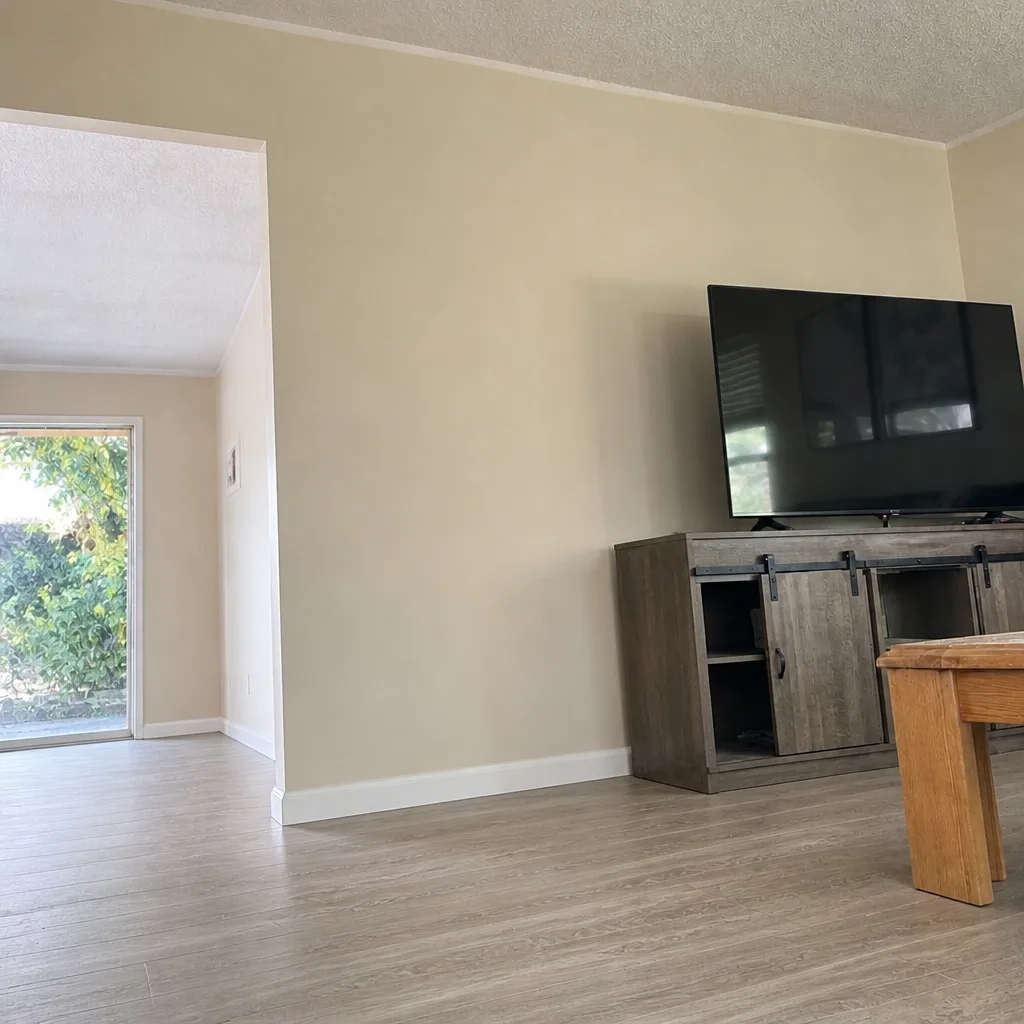
See the difference
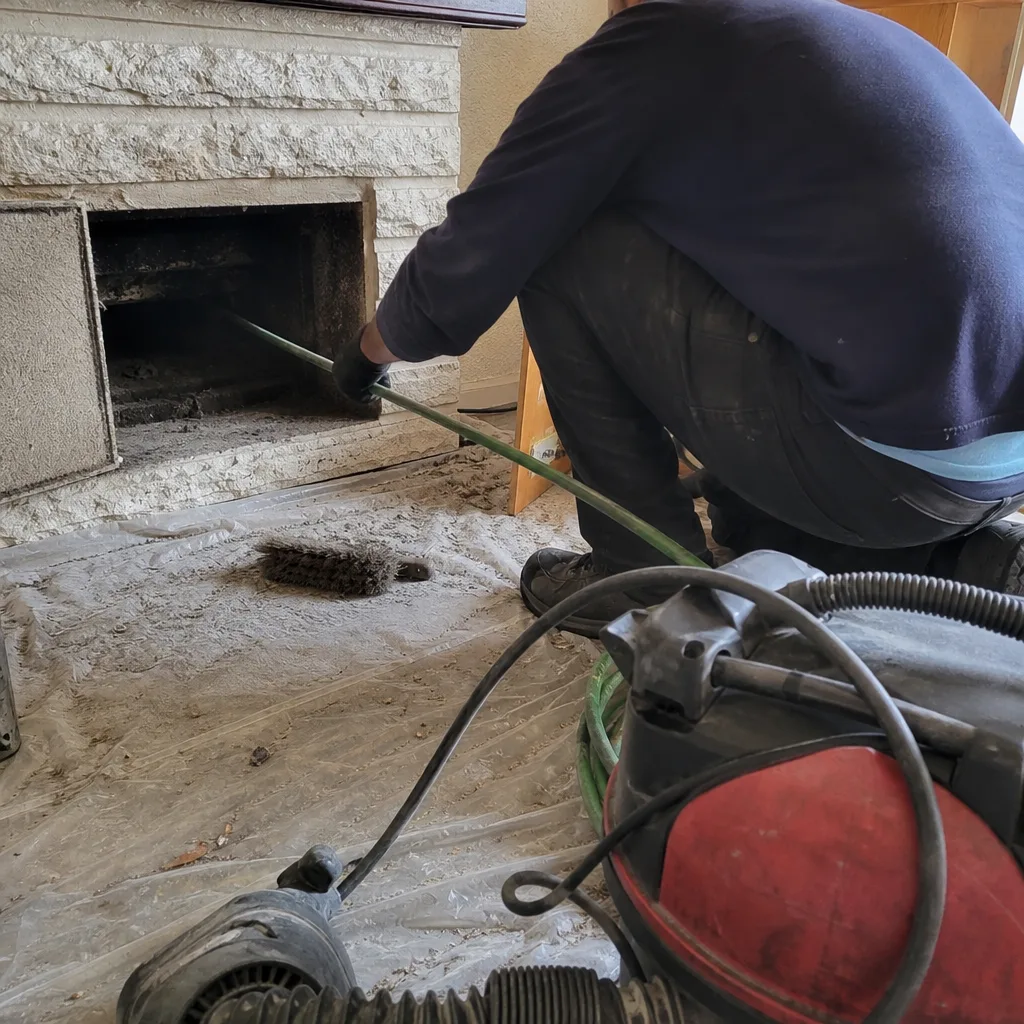 Before
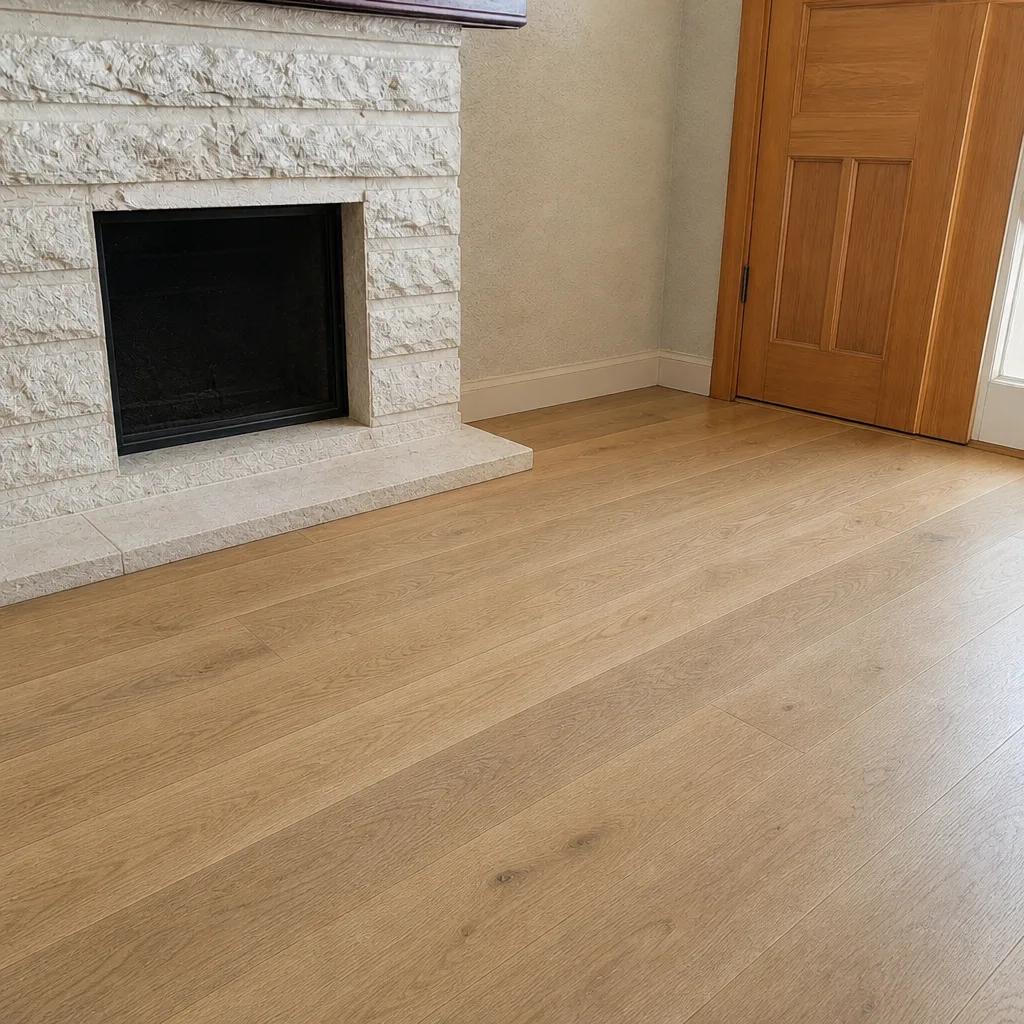 After
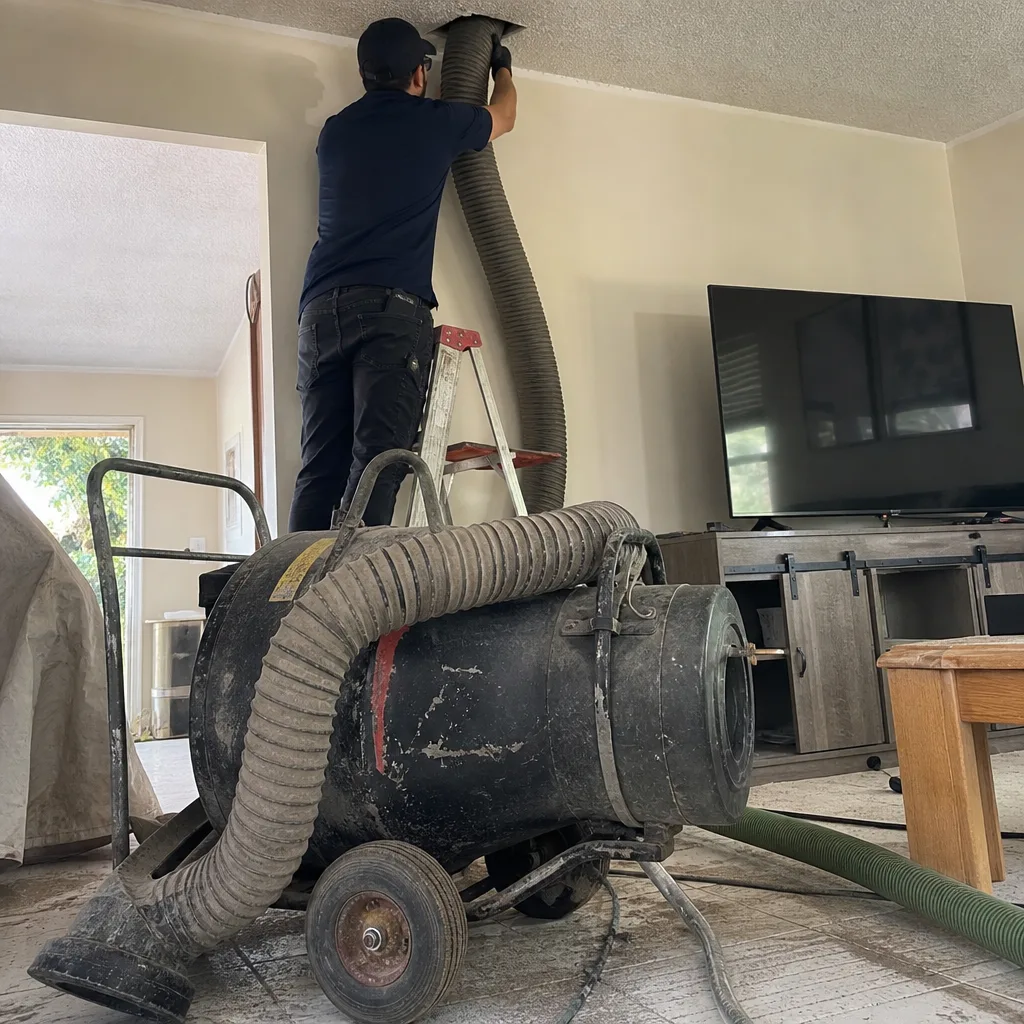 Before
 After
 Before
 After
When to Call a Professional
Some conditions call for an inspection rather than a wait-and-see. Visible dust settling on furniture within a few days of cleaning surfaces, a musty smell at the registers when the system first starts, or a family member whose allergies flare up when the HVAC runs are all signs worth checking. A recent home purchase is another: prior owners may have gone years without cleaning, and a pre-cleaning inspection tells you what you inherited. After a major regional wildfire event, an inspection makes sense even if the system looks fine from the vents.
A dryer that takes two cycles to dry a load is its own signal. Lint buildup is a fire risk, and in Mission Viejo homes with longer vent runs it’s worth a dedicated check. Mission Viejo Air Duct Cleaning Pros offers free estimates in Mission Viejo – call (877) 883-1452. We answer 24/7. Fast dispatch from 7am to 7pm.
Frequently Asked Questions
Cost depends on the size of the system, the number of supply branches and returns, and whether repair, sealing, or sanitizing is included. Any fair price is quoted per system, in writing, before work begins – never as a per-vent figure that changes on site. Call (877) 883-1452 for an exact quote – estimates are free.
Low quotes usually reflect less equipment, fewer components in scope, or a missing verification stage. A shop-vac-based call can be priced low because it doesn’t sustain negative pressure or agitate the full branch system, so the work is fundamentally shorter and lighter. Compare what’s included, not just the number. Call (877) 883-1452 to walk through the difference on your system – estimates are free.
Before-and-after photos or video of the same locations, plus a component-by-component verification checklist tied to those images. Ask to see pre-cleaning footage before work starts. If a contractor can’t provide both, the extraction stage can’t be confirmed. Call (877) 883-1452 to see how we document a job – estimates are free.
Most homes benefit from an inspection every few years, with cleaning driven by what the inspection finds rather than by a fixed calendar. In Mission Viejo, moisture and regional wildfire ash are the two conditions that push the interval shorter – musty odors or visible dust settling quickly after cleaning are the signals to act on. Call (877) 883-1452 for an inspection quote – estimates are free.
Cleaning removes accumulated dust, ash, and moisture-bound deposits from the system, which improves air quality moving through the house and removes a reservoir that recirculates on every cycle. It isn’t a medical treatment, and no legitimate contractor should present it as one. What it does is remove what the system has collected. Call (877) 883-1452 for an assessment – estimates are free.
Removing the deposits addresses the source of the smell in most cases, but in Mission Viejo’s marine-layer climate the cause is often moisture at joints or damp duct surfaces, so cleaning alone can let it return. Sealing the source is the durable fix. Call (877) 883-1452 to have both checked – estimates are free.
The Bottom Line
Air duct cleaning is a sequence, not a single step, and knowing the sequence is how you tell a real job from a marketing visit. The full process runs inspection, isolation under negative pressure, agitation, extraction, and verification, and it covers supply ducts, return ducts, and the air handler cabinet as one loop. Mission Viejo’s marine layer and regional wildfire ash load systems in ways inland homes don’t see, so moisture and ash deserve specific attention. Demand before-and-after documentation and a verification checklist. Compare per-system prices, not per-vent ones. Call (877) 883-1452 for a free estimate. We answer 24/7. Fast dispatch from 7am to 7pm, Sunday through Friday.
Written by the team at Mission Viejo Air Duct Cleaning Pros.