
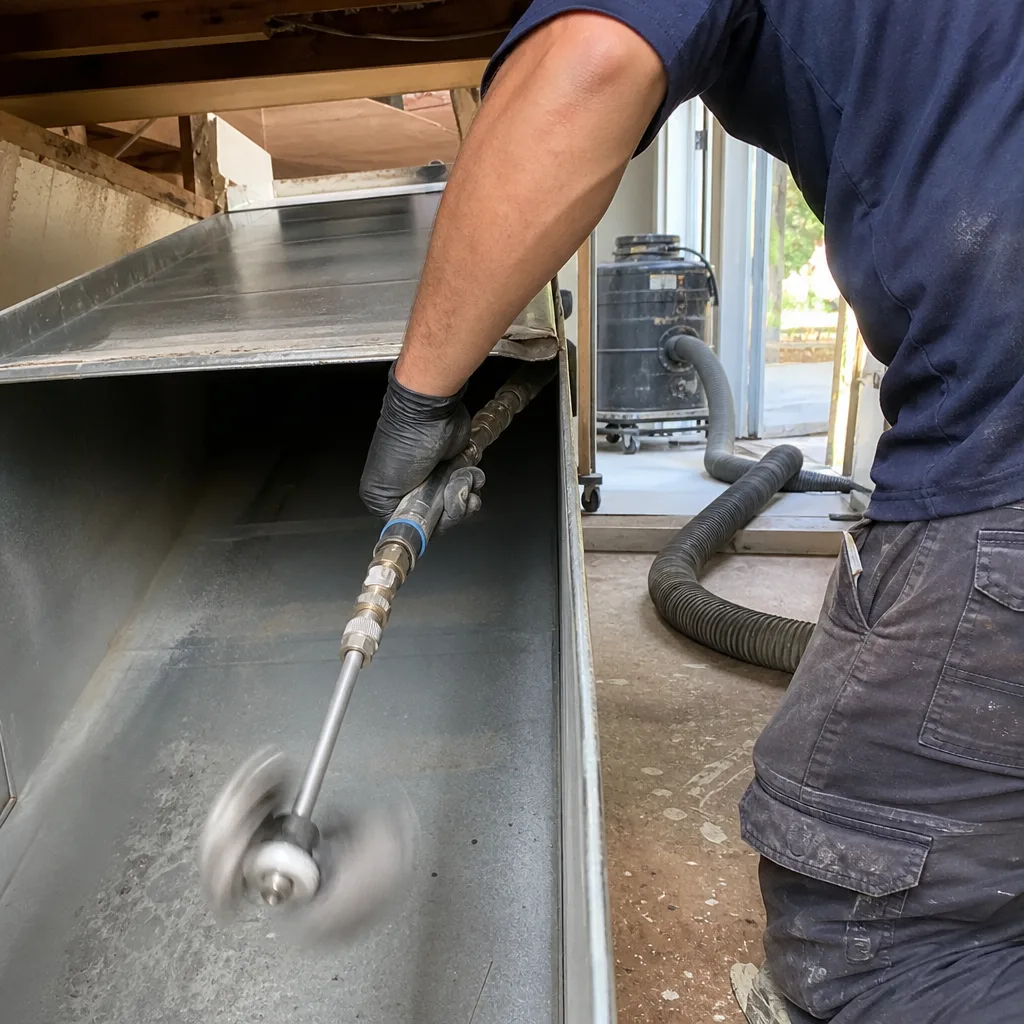
Last updated November 25, 2026
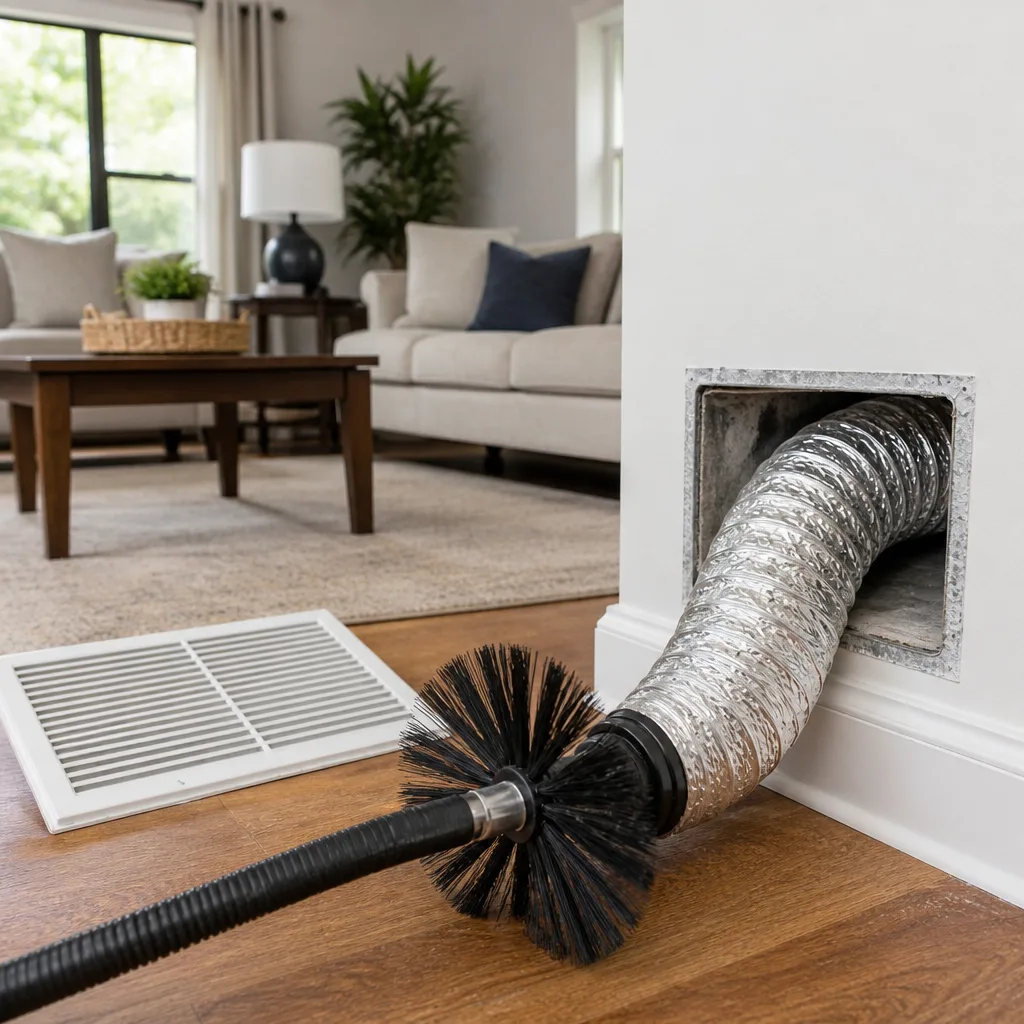 Whole-home duct cleaning
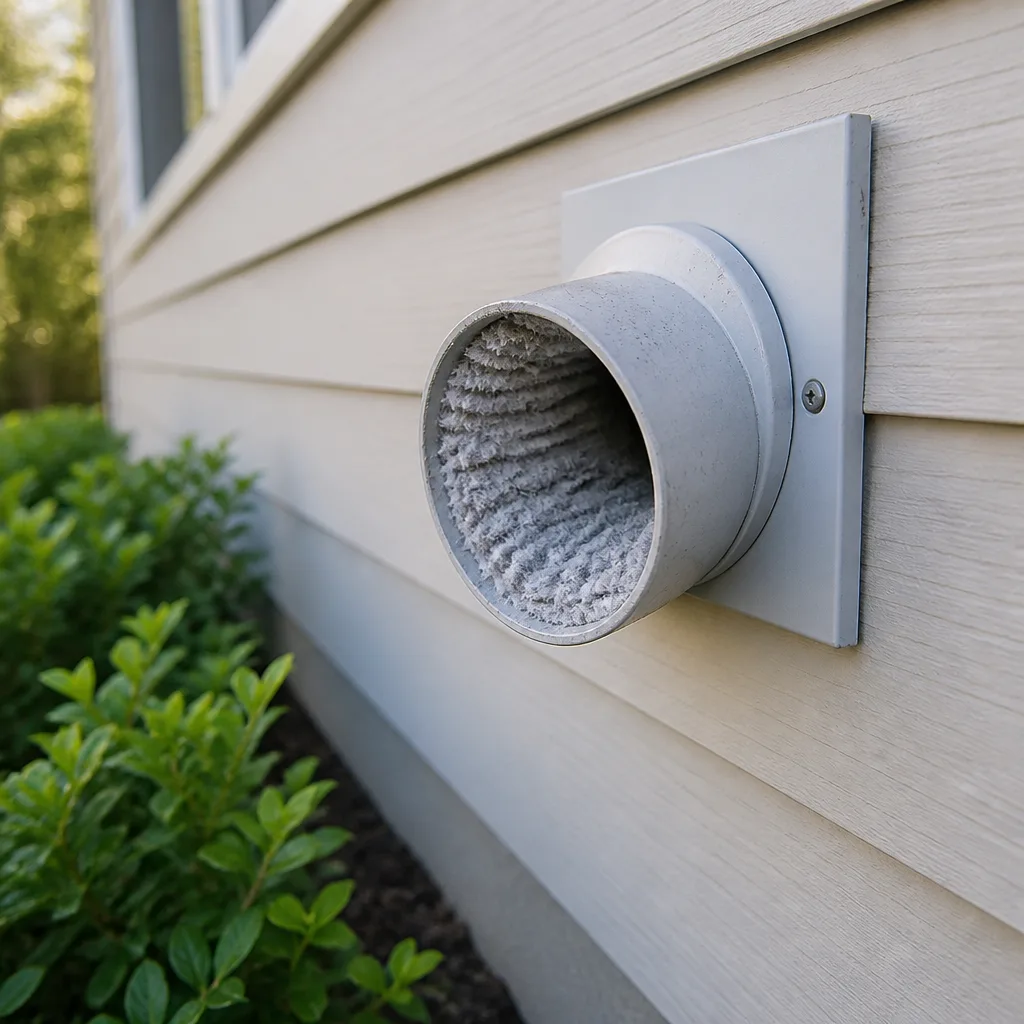 Dryer vent cleaning
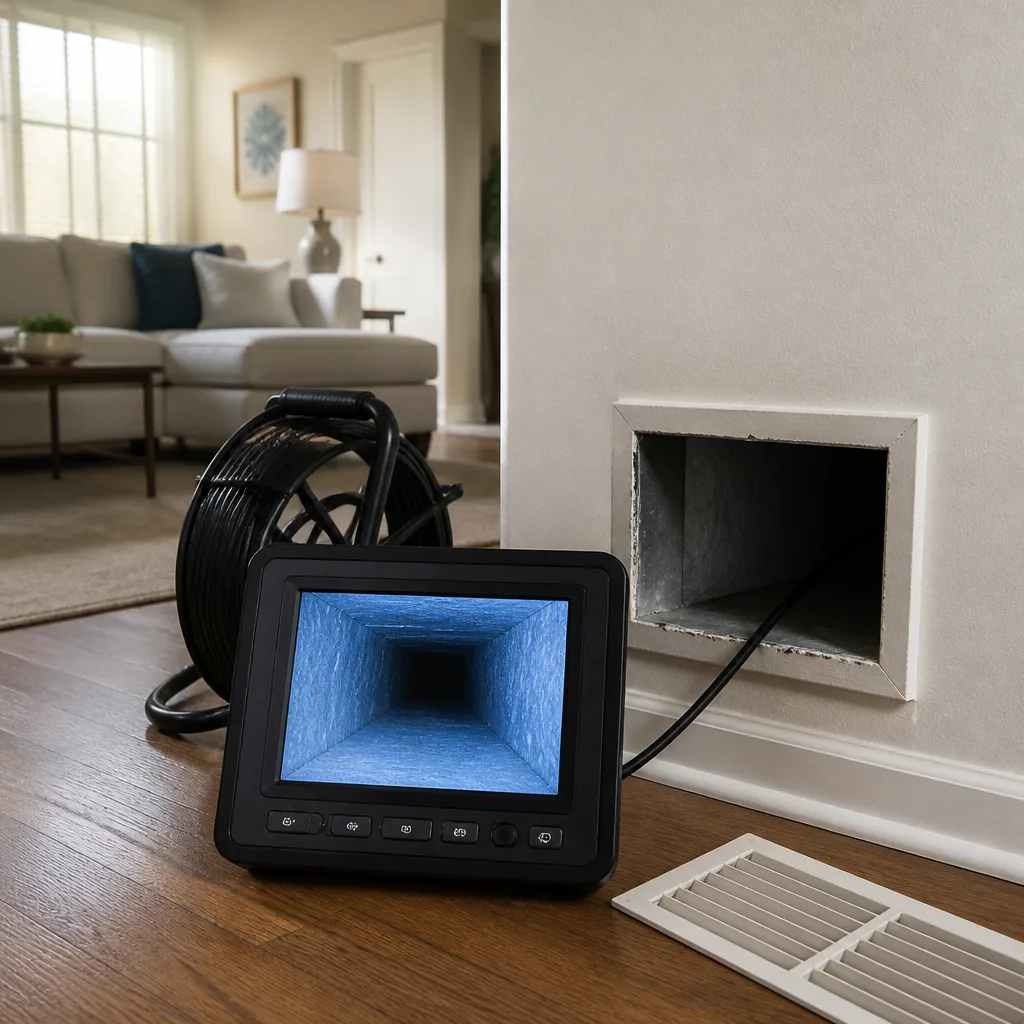 Camera inspection
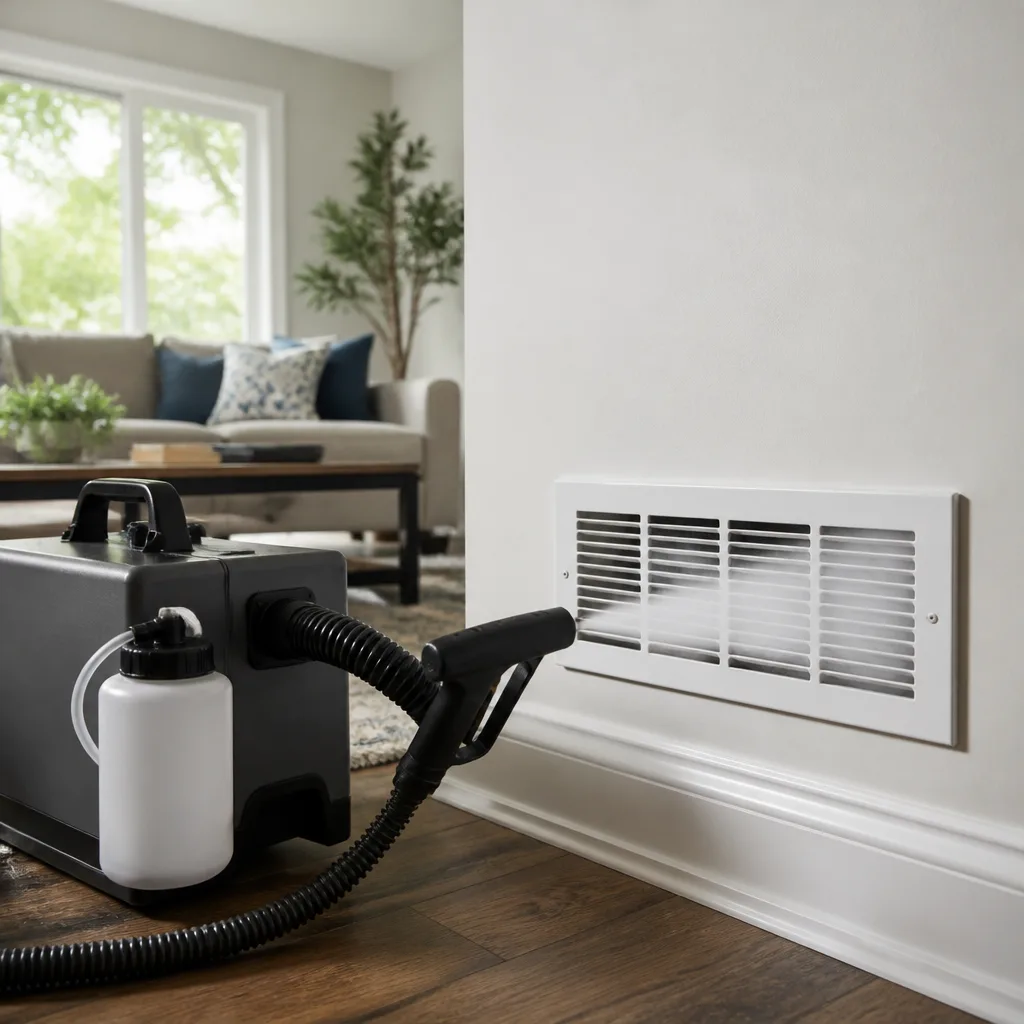 Sanitizing & deodorizing
Whole-system duct and dryer vent check with before-and-after photos - you see exactly what came out of your vents
That "$99 whole-house special" is a bait ad - the real number appears once they are in your hallway, or the "clean" is a shop-vac at the register. We photograph the inside of your ducts before and after instead.
Air Duct Cleaning Warning Signs: A Mission Viejo Homeowner’s Reference Guide
Most homeowners blame the equipment. The furnace is old, the air conditioner is undersized, the thermostat must be off. So they call an HVAC company, pay for a tune-up or a new unit, and the problem stays exactly where it was. In our experience, a large share of “equipment problems” in Mission Viejo homes trace back to the duct system instead: a disconnected flex run in the attic, a crushed section behind a chase, or a duct lining that’s been collecting dust since the house was built. This guide maps the five sensory warning signs of a failing duct system to what they actually mean, so your diagnosis starts on the right side of the air handler.
Quick Answer
Air duct cleaning warning signs in a Mission Viejo home include visible dust streaking at supply registers, a musty or stale smell when the system starts, weak airflow in upstairs rooms, rattling or whistling from the ducts, and allergy symptoms that flare during specific seasons. The critical distinction is between a dirty duct problem (contamination that needs cleaning and sanitizing) and a duct integrity problem (leaks, disconnects, or collapsed runs that need repair and sealing). The two look similar from the thermostat and require completely different interventions.
Styles & brands we work with
- Whole-home duct cleaning
- Dryer vent cleaning
- Camera inspection
- Sanitizing & deodorizing
Table of Contents
- The Five Sensory Warning Signs and What Each One Points To
- Dirty Ducts vs. Damaged Ducts: Two Different Problems
- The Register Dust Pattern Test
- Uneven Room Temperatures and What They Reveal
- Smell, Sound, and the Attic Duct Run
- Allergy Flare-Ups and Mission Viejo’s Seasonal Patterns
- Warning Signs That Need Immediate Service vs. Monitored Observation
- The Dryer Vent Warning Signs Nobody Checks
The Five Sensory Warning Signs and What Each One Points To
You don’t need a moisture meter or a thermal camera to spot most duct problems. You need your eyes, your nose, your hand, your ears, and a few minutes of attention. Each of the five senses points at a specific part of the system.
Visual: dust streaks and dark rings at supply registers. A thin, even film of dust around a register is normal household dust settling. A thick, dark, fuzzy ring that builds back within weeks is not. It usually means the duct lining itself is shedding fibers, or that the duct run has negative pressure pulling dust through a seam before it ever reaches the room. The distinction matters: one calls for cleaning, the other for sealing.
Smell: a musty or “wet cardboard” odor at startup. When the blower kicks on and you catch a smell you don’t smell when the system is off, whatever’s causing it lives in the duct. In Mission Viejo’s mild climate this is rarely frozen lines or winter condensation. It’s more often a slow moisture source: a duct run running through a humid crawlspace, a poorly sealed connection near a bathroom exhaust, or organic buildup on the interior lining.
Airflow: inconsistent force from room to room. Hold your hand over each supply register while the system runs. If one register pushes noticeably weaker air than its neighbor, the problem is between the air handler and that register. We’ve written more about the full process on our air duct cleaning page.
Sound: rattling, whistling, or a whooshing at one register. Whistling means restricted airflow at a leak or crush point. Rattling suggests a duct run is loose from its hanger. Both are duct integrity signals, not equipment signals.
Dust pattern: where the dust lands. Dust concentrating on horizontal surfaces near supply registers, rather than evenly through the room, points to a source at the register itself rather than household dust settling from the air.
Dirty Ducts vs. Damaged Ducts: Two Different Problems
This is the distinction that saves Mission Viejo homeowners the most money, and it’s the one most companies skip. A dirty duct and a damaged duct produce overlapping symptoms but need different work.
Dirty ducts are a contamination problem. The system is airtight and intact, but the surfaces inside have accumulated dust, dander, construction debris from an original build or a renovation, or biological growth from humid air. Cleaning and sanitizing addresses this. Professional-grade equipment matters here: our technicians use Rotobrush and Nikro systems, the same tooling used in commercial applications, along with Abatement Technologies containment to keep loosened debris from migrating into the living space during the work.
Damaged ducts are a pressure problem. The system leaks, disconnects, or collapses somewhere you can’t see. Cleaning a damaged system is like washing a bucket with a hole in it: you can do it, but the air quality problem returns quickly because unfiltered attic or crawlspace air keeps entering. The fix is repair and sealing, not more cleaning.
How to tell which one you’re dealing with:
- If symptoms ease after a cleaning and stay away for a couple of years, you had a dirty duct problem.
- If symptoms return within weeks, or your energy bill stays high after cleaning, you likely have an integrity problem.
- If dust returns to a specific register faster than all the others, the leak or crush point is upstream of that register.
- If a room is consistently hotter or colder regardless of the season, that’s a distribution problem, not a dirt problem.
The Register Dust Pattern Test
Here’s a test you can run this week without any tools. It tells you more about your duct lining condition than most thermostats will.
Take a clean white cloth or a paper towel and wipe the face of a supply register, then the grille slats, then the surface immediately around it. Look at where the dust concentrates.
- Even, light gray film across the whole register: normal. Household dust settles on every surface. No action needed beyond regular filter changes.
- Thick, dark, fuzzy deposits at the outer perimeter of the grille, lighter in the center: the duct is blowing unfiltered air from a damaged or unsealed connection right before the register. Perimeter deposits happen because the airflow carries particles to the edges of the grille and drops them there. This is the pattern we look for first when a homeowner reports persistent dust.
- Dark streaks trailing from the slats toward the room: airflow is pulling dust out of the duct and depositing it in a directional pattern. Often paired with a dirty duct lining.
- Fine gray dust concentrated inside the slats only, clean face: the register itself is fine, but the boot (the transition box behind it) may be leaking into a wall cavity.
Repeat the test at three registers in different parts of the house. If only one shows the perimeter pattern, that register’s duct run is your lead suspect. Our HVAC cleaning page covers what a full system cleaning involves when the pattern shows up everywhere.
Uneven Room Temperatures and What They Reveal
A two-room temperature difference of 4-6 degrees is the single most misdiagnosed symptom in Mission Viejo homes. The most common explanation isn’t undersized equipment. It’s a disconnected or collapsed flex duct run in the attic that nobody has looked at since the house was built.
Flex duct is exactly what it sounds like: a flexible insulated tube running from a trunk line to each supply register. In an attic, it’s supported by straps and hangers. Over time, those straps loosen, the duct sags, and where it bends sharply it can crimp shut. A crimped run delivers almost no air. A disconnected run delivers no air at all and dumps conditioned air into the attic, which is why your energy bill climbs at the same time your upstairs bedroom bakes.
Here’s why this trips up so many homeowners:
- The equipment still runs normally, so nothing “sounds broken.”
- The air handler isn’t the problem, so an HVAC tune-up finds nothing.
- No one climbs into the attic to trace the run unless there’s a reason to.
- Flex duct failures are invisible from inside the room, and a dropped run often leaves the register blowing weakly rather than not at all.
If two rooms are consistently 4-6 degrees off from the thermostat target while the rest of the house is comfortable, ask for a duct inspection before anyone quotes a new air handler. Duct repair and sealing is part of the full-system scope we handle. Clean ducts. Sealed ducts. Healthy air.
Smell, Sound, and the Attic Duct Run
Attics in Mission Viejo get hot. Not as hot as inland valleys further east, but hot enough that an attic duct run sits in a space that sees real temperature swings between floors. That has consequences for what you smell and hear.
Musty odors that only appear when the system runs trace back to duct internals almost every time. The smell is the duct pulling moisture-laden air from a crawlspace or from an unsealed connection near a bathroom exhaust and delivering it through the supply register. If you’ve had a bathroom fan re-vented into the attic rather than outside, that’s a common culprit.
Rattling or banging is a different signal. Flex duct that’s come loose from a hanger will slap against a joist when the blower starts. A single sharp “pop” at startup can indicate a flex run that’s partially separated at a collar. Persistent whistling at one register means that run is constricted or leaking pressure elsewhere in the system.
Both smell and sound fall into the duct integrity category, not the dirty duct category. Professional-grade equipment helps diagnose the location, but the fix is repair, resealing, and in some cases re-routing the run to eliminate the sharp bend. We sometimes recommend Guardsman-line products post-repair to protect the duct surface, and Honeywell or Aprilaire filtration upgrades to help the system stay clean afterward, but only after the integrity issue is resolved.
Allergy Flare-Ups and Mission Viejo’s Seasonal Patterns
When an allergy flare-up happens every year at the same time, it’s easy to blame outdoor air. In our experience, indoor triggers deserve a look first. Mission Viejo’s inland location and warm, dry summers mean the system runs heavily for months, recirculating the same air through the same ducts. Any contamination sitting on the duct lining gets a long, uninterrupted season to move through the house.
Distinguishing indoor from outdoor triggers is straightforward enough to test yourself:
- Indoor: symptoms are worse inside than outside, flare within minutes of the system starting, and ease when the system is off or when you’re away from home.
- Outdoor: symptoms track with the pollen count or wind, are worse outside or with windows open, and are consistent across rooms.
- Both: symptoms peak indoors during the heating season on the first cold mornings, because the system is pushing the full season of accumulated duct dust into every room at once.
If the pattern points indoors, cleaning and sanitizing the system is the right first step. Abatement Technologies filtration and containment equipment used during the work keeps loosened contamination from spreading through the house while the ducts are opened. Sanitizing after cleaning addresses any biological growth on duct surfaces.
Warning Signs That Need Immediate Service vs. Monitored Observation
Not every warning sign is urgent. Here’s how to sort them so you’re not paying for service you don’t need, and not ignoring something that needs attention now.
Signs that need service promptly
Musty smell at startup that’s gotten stronger over weeks. A smell that’s intensifying usually means the moisture source is active and the biological growth is expanding. Waiting rarely helps.
Dust that visibly returns within days of cleaning a register. That’s an active source, not settled dust. Every day waiting is more contamination in the duct.
Any sign of pest activity in the ducts (droppings, scratching sounds, nesting material visible at a register). This crosses into a health and safety concern that requires more than a normal cleaning.
Dryer taking two cycles to dry a normal load. This is a fire-hazard warning sign, covered below. It’s not a “monitor it” item.
Signs that can be monitored
One register with slightly weaker airflow but no other symptoms. Worth noting in your calendar, worth checking at the next service visit, but not an emergency.
A light gray film on registers you wipe once a month. Normal household dust. Change your filter on schedule and check again in a few months.
A 1-2 degree temperature difference between rooms. Small distribution differences are normal in single-zone homes. A 4-6 degree difference is a different conversation.
The line between the two lists comes down to whether the problem is active or stable. An active moisture source, active dust source, or active safety hazard needs service. A stable, mild symptom can be watched. Professional-grade equipment and an honest inspection tell you which category you’re in, and we don’t recommend work you don’t need.
The Dryer Vent Warning Signs Nobody Checks
Of everything covered in this guide, the dryer vent is the one warning sign most likely to be overlooked entirely. Dryer vent cleaning is directly linked to reducing fire hazard, and it’s a standalone service we handle alongside HVAC work. The signs are easy to spot once you know what to look for.
- Clothes take two cycles to dry. Restricted airflow means the moisture can’t escape efficiently. This is the most common signal.
- The dryer body or the top of the dryer is hot to the touch after a cycle. Heat that should be venting outside is building up inside the appliance.
- Lint is visible around the dryer’s back or inside the vent hood outside. Lint buildup is the fuel for a dryer fire.
- The outside vent flap doesn’t open fully when the dryer runs, or doesn’t open at all. A stuck or blocked flap means the vent path is restricted.
- A musty or “hot lint” smell in the laundry area. Worth taking seriously, not a “wait and see.”
Any of these justify a call. The inside of a dryer vent is a fire-risk surface, and no amount of monitoring fixes a blocked line. Our dryer vent cleaning page covers the process and what a proper clean looks like. From the duct opening to the dryer vent, we cover the systems most companies overlook.
Common Mistakes to Avoid
- Replacing equipment before inspecting the ducts. A new furnace or air handler won’t fix a disconnected flex run. Duct inspection should be the first step when temperature differences or airflow problems show up.
- Paying per-vent prices from a coupon. Low-bid duct cleaning operators advertise a small number that turns into a much larger invoice once the technician is inside. Ask for a flat price per system agreed before work starts.
- Cleaning a damaged duct and calling it done. If the system has leaks or disconnects, cleaning alone doesn’t solve the problem. It just resets the contamination clock.
- Skipping the dryer vent because it’s “not HVAC.” A blocked dryer vent is a fire risk that’s completely separate from the air quality concern. Both matter, both deserve scheduled attention.
- Ignoring the attic. It’s the least-visited part of most Mission Viejo homes and where the most duct failures happen. Any inspection that doesn’t include the attic is incomplete.
- Assuming a musty smell will go away on its own. An active moisture source won’t improve. It’ll keep feeding the contamination.
- Hiring a generalist for a full-system job. Professional-grade equipment matters. A shop vac and a coupon doesn’t cover a duct cleaning, repair and seal scope, which is what most warning signs actually require.
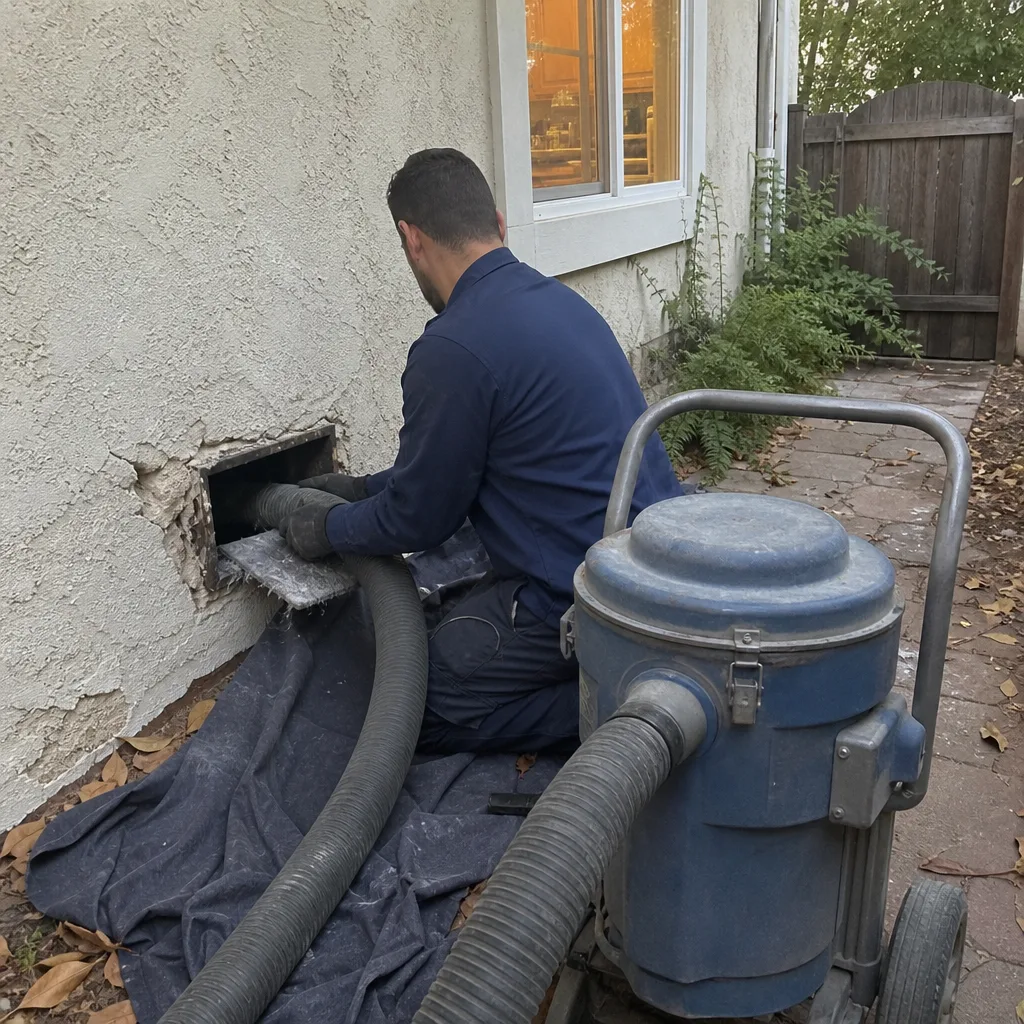
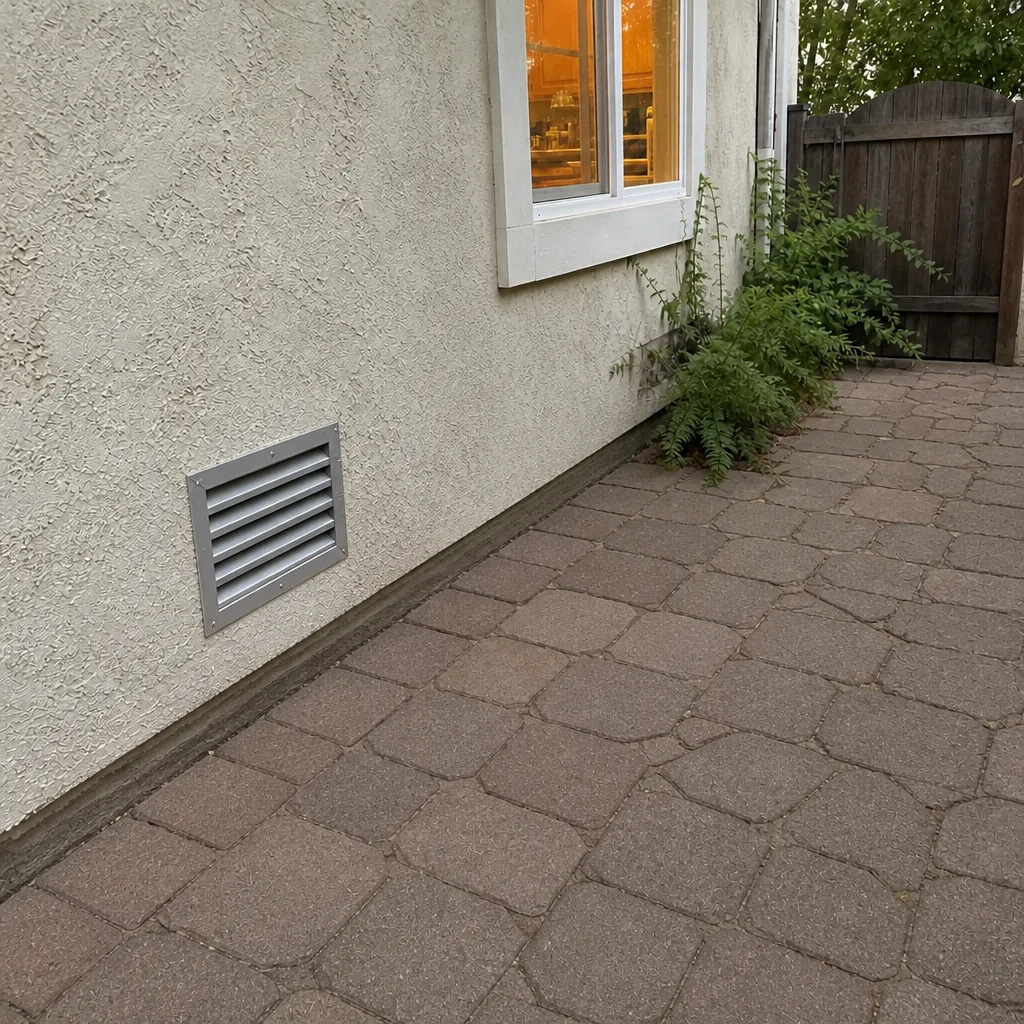
See the difference
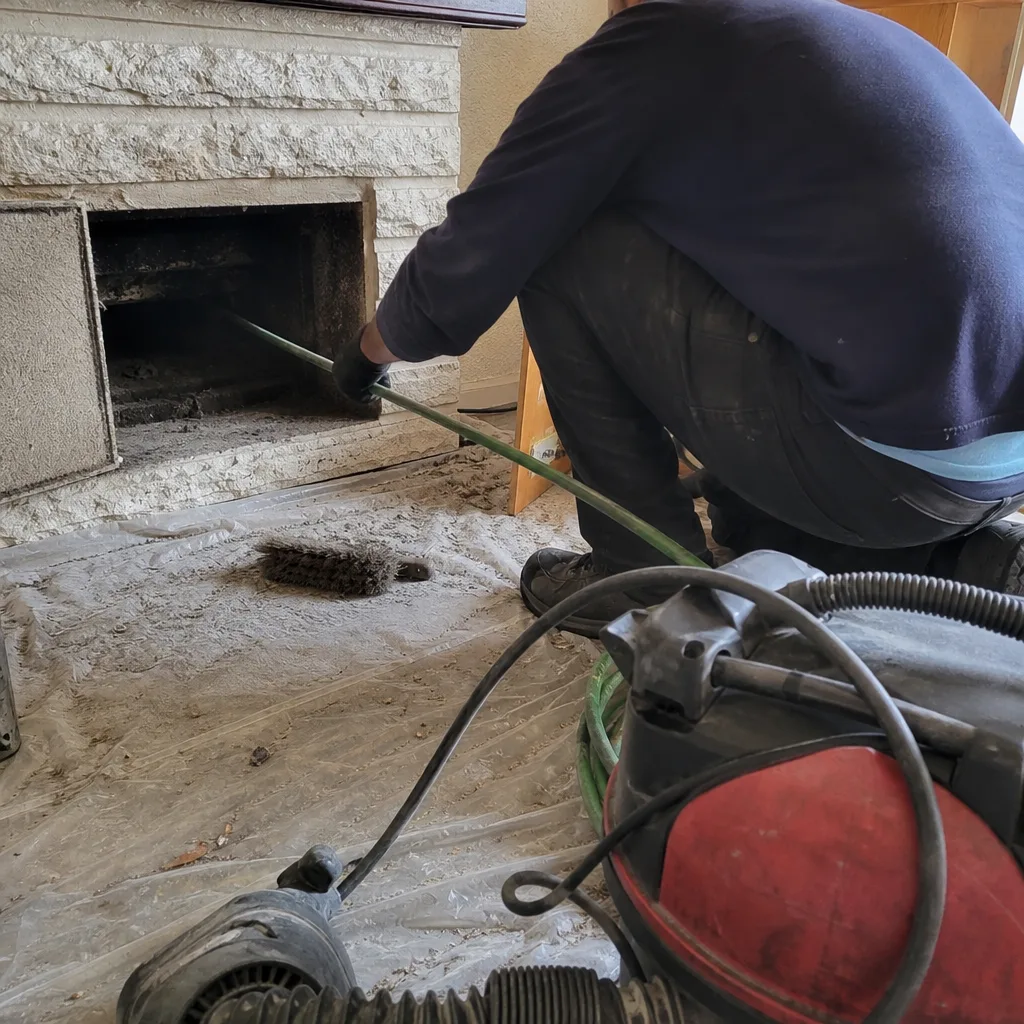 Before
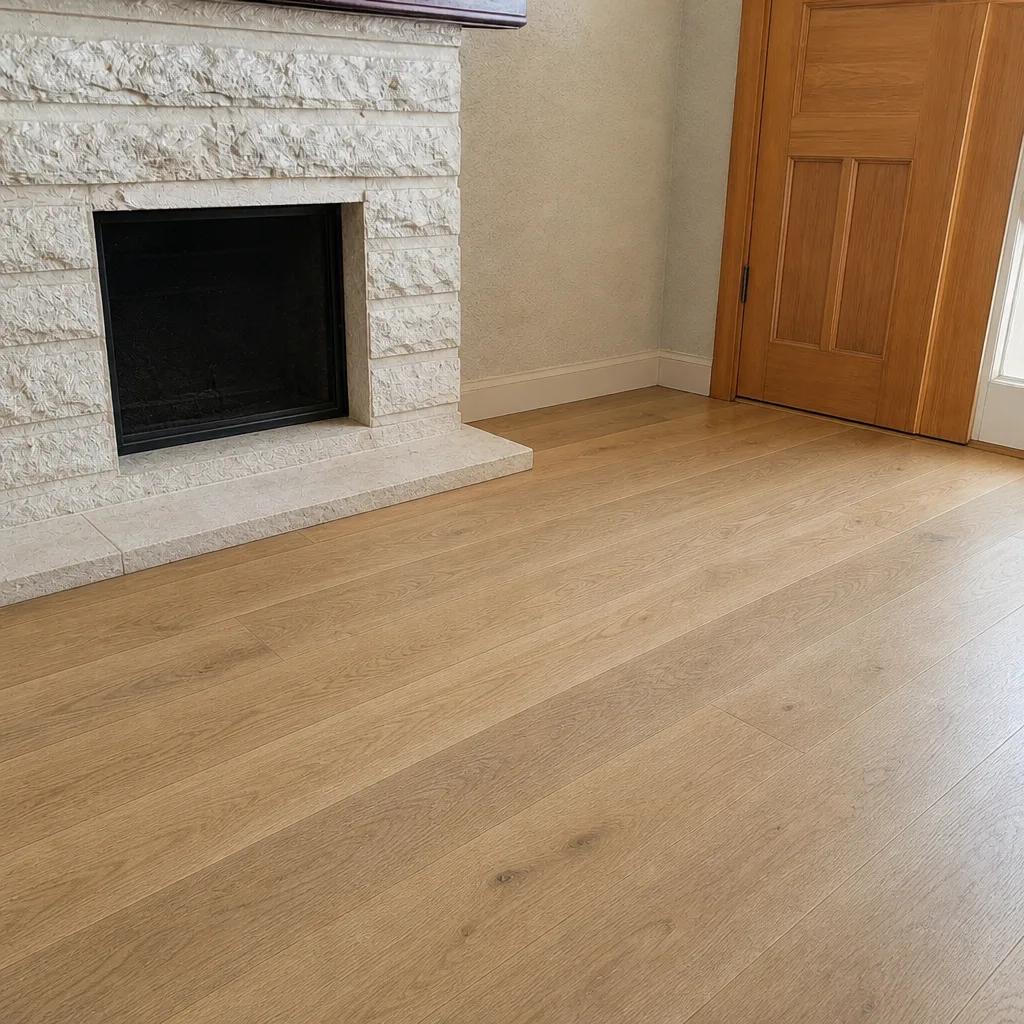 After
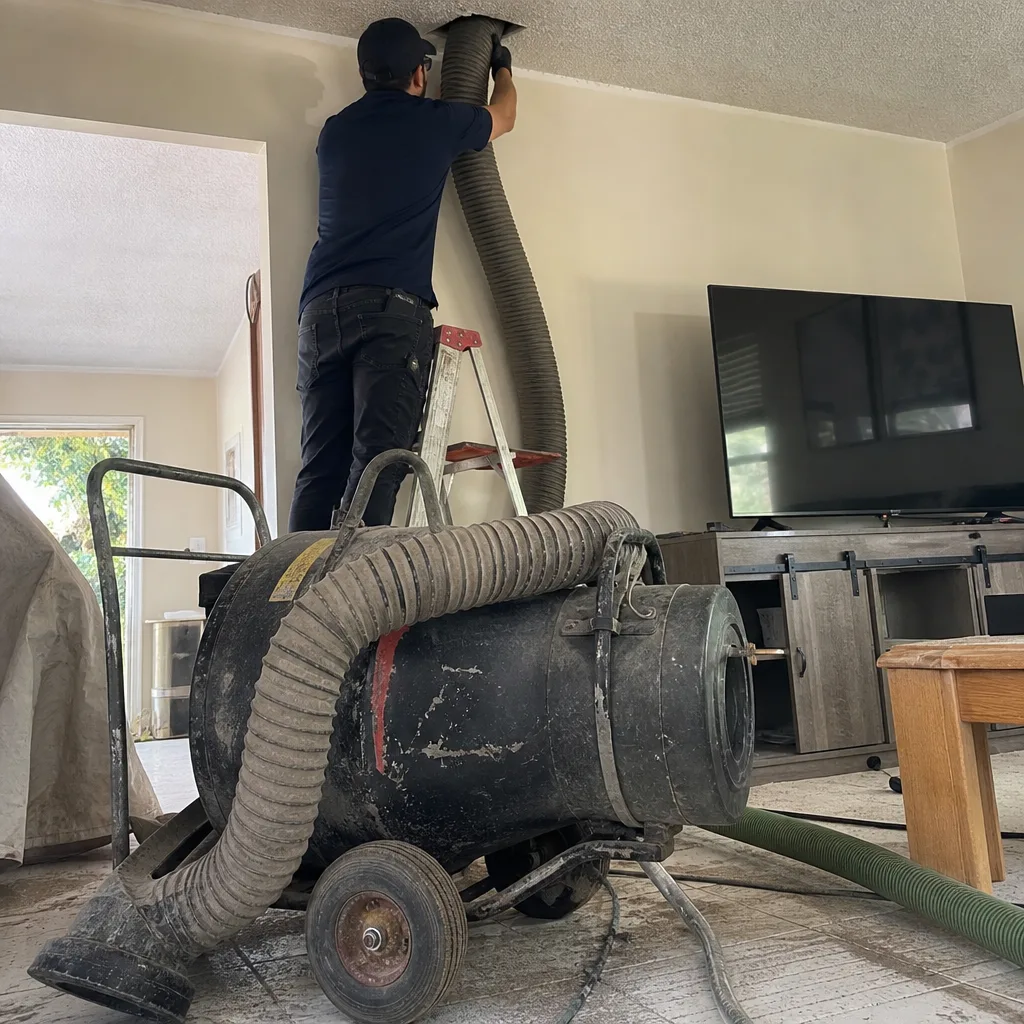 Before
 After
 Before
 After
When to Call a Professional
Call when any of the following is true: a musty smell appears at system startup, dust streaks return to a register within days of cleaning, two rooms run 4-6 degrees off from the thermostat, a dryer takes two cycles for a normal load, or you’re moving into a Mission Viejo home and don’t know when the ducts were last serviced. Also call if allergy symptoms follow an indoor pattern rather than an outdoor one. Mission Viejo Air Duct Cleaning Pros offers free estimates in Mission Viejo, and we show you what we find before we start and after we finish. Our technicians have up to 11 years of experience, and we work with professional-grade equipment across the full indoor air quality chain: cleaning, dryer vent safety, HVAC system cleaning, duct repair and sealing, and sanitizing. Call (877) 883-1452 to schedule an inspection.
Frequently Asked Questions
Start with an inspection. If the register dust pattern test shows heavy perimeter deposits, a musty smell appears at system startup, or dust returns to a register within days of cleaning, the duct likely needs service. A thin gray film and even room temperatures mean you can watch it. Any inspection that doesn’t include a look inside the attic isn’t complete. Call (877) 883-1452 for a free estimate; we’ll tell you which category you’re in.
A 4-6 degree difference usually points to a disconnected or collapsed flex duct run in the attic, not undersized equipment. Flex duct failures are invisible from inside the room and often leave a register blowing weakly rather than not at all, which is why they get misdiagnosed as HVAC problems. A duct inspection will find the run before anyone quotes a new air handler. Call (877) 883-1452 for an estimate.
Not in kind, but in timing. Mission Viejo’s mild winters and warm inland summers mean the system runs heavily for much of the year, recirculating the same air through the same ducts. Allergy flare-ups that follow an indoor pattern tend to be the most visible signal here. A musty smell at startup is another one we check for regularly. Call (877) 883-1452 for an estimate; estimates are free.
A musty smell at startup indicates moisture and biological growth somewhere in the duct system, and that’s a health concern worth addressing promptly rather than monitoring. The underlying source could be a humid crawlspace, an unsealed connection, or bathroom exhaust venting into the attic. Any of them justify a look. Call (877) 883-1452 for an exact quote; estimates are free.
There’s no single schedule that fits every home. A home with pets, recent renovation dust, or allergy-sensitive occupants may need it more often than a home with neither. The most useful rule: any time a warning sign on this guide’s list becomes active, get an inspection rather than waiting for a calendar date. Call (877) 883-1452 for an estimate.
Low-bid operators often skip the attic, clean only the trunk line rather than every run, and arrive with consumer-grade equipment that can’t reach into a flex duct. The cheap quote is often per-vent, and the invoice grows once the technician is on-site. We give one flat price per system agreed before work starts, using Rotobrush and Nikro equipment with Abatement Technologies containment. Call (877) 883-1452 for an exact quote; estimates are free.
Look for documented evidence. Before-and-after photos of the ducts, a flat price agreed before the work starts, and a written summary of what was cleaned, repaired, or sealed. If a company can’t show you the state of the ducts before and after, walk away. Call (877) 883-1452 for an estimate; we’ll show you what we find before we start.
Yes, in most cases. Dryer vent cleaning is a dedicated service we offer alongside duct work, and it addresses a separate fire-hazard concern that most duct-only cleaners ignore. If your dryer is taking two cycles for a normal load, add the dryer vent to the scheduled visit. Call (877) 883-1452 for an estimate; estimates are free.
The Bottom Line
The five sensory warning signs (visual, smell, airflow, sound, dust pattern) tell you where to look. The register dust pattern test tells you the condition of the lining. The 4-6 degree temperature test in two rooms points at the attic. Together those three checks catch most duct problems before they get expensive. The key is separating a dirty duct problem from a duct integrity problem: one needs cleaning and sanitizing, the other needs repair and sealing. Mission Viejo Air Duct Cleaning Pros offers all five service categories under one roof, with professional-grade equipment and one flat price per system agreed before work starts. Call (877) 883-1452 for a free estimate. We answer 24/7. Fast dispatch from 7am to 7pm, Sunday through Friday.
Written by the team at Mission Viejo Air Duct Cleaning Pros.