
Last updated November 25, 2026
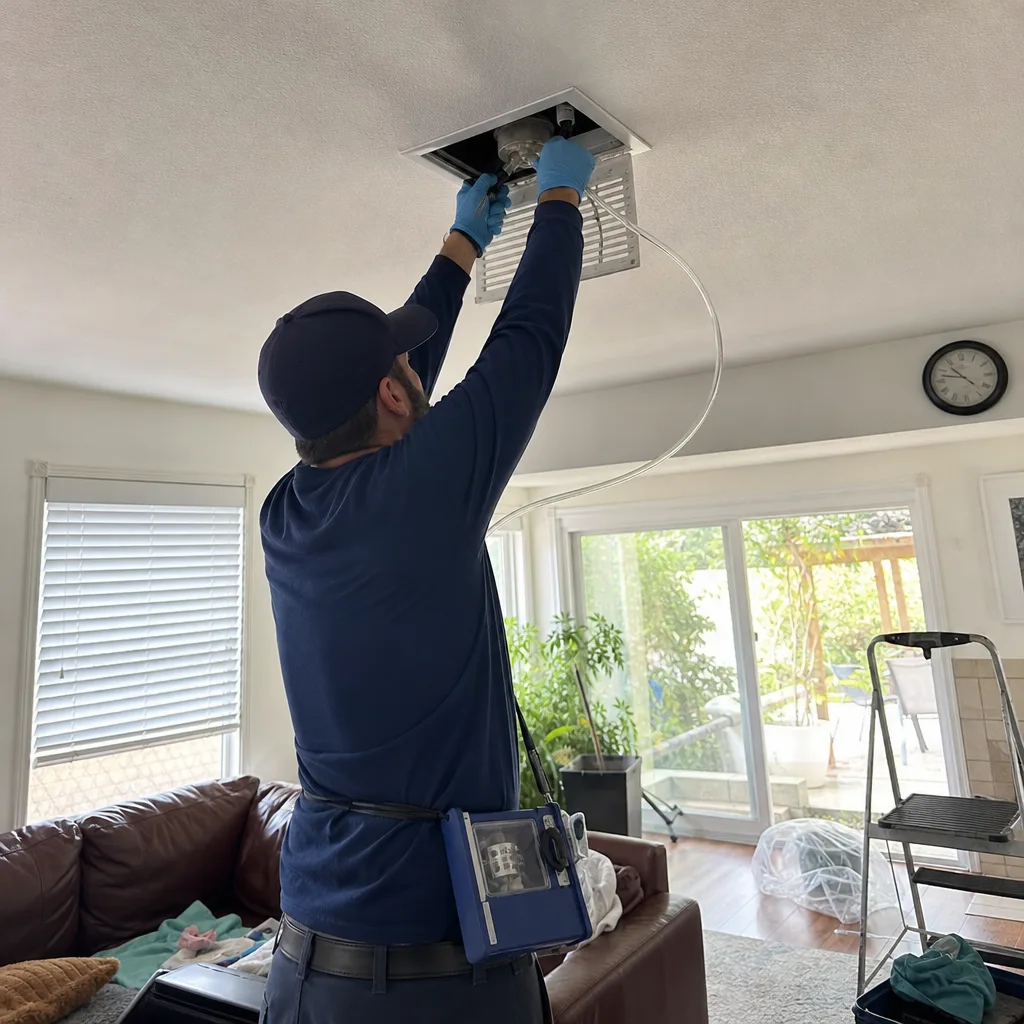
 Whole-home duct cleaning
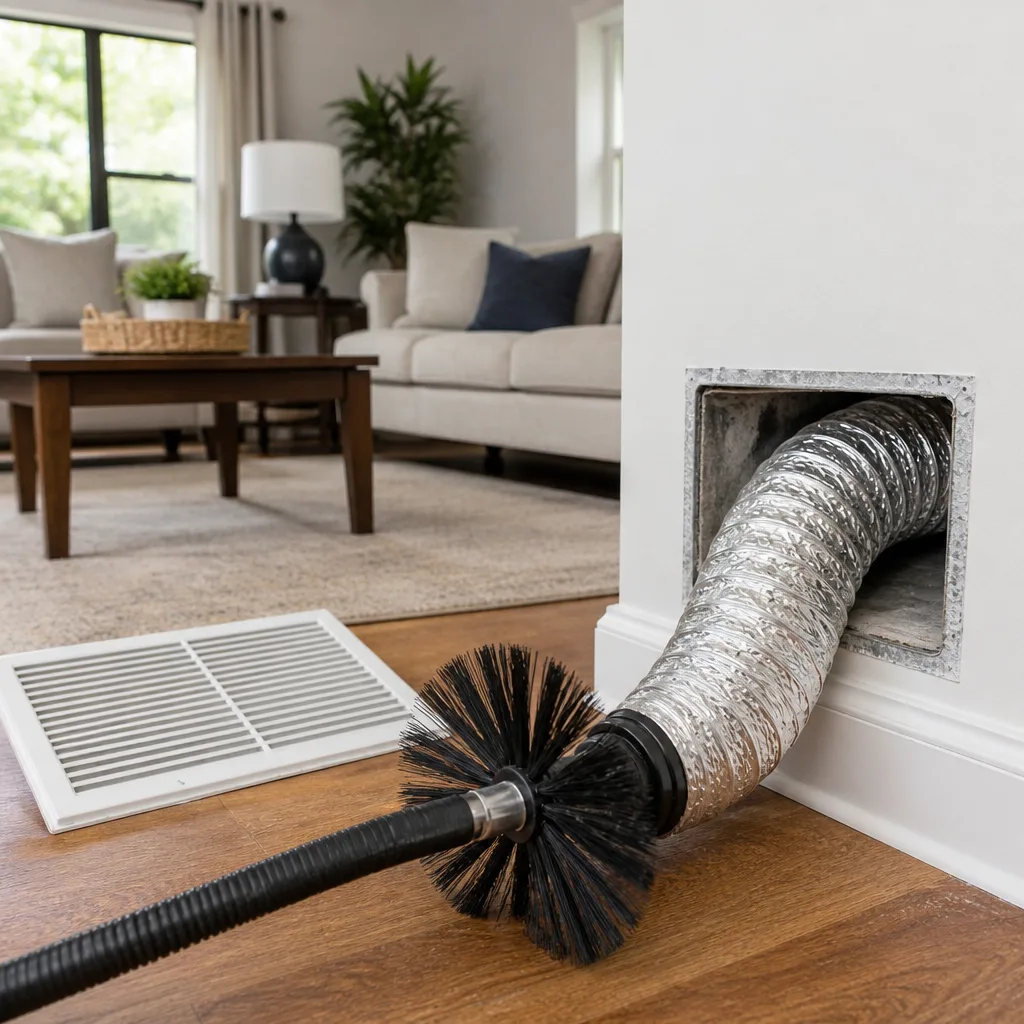
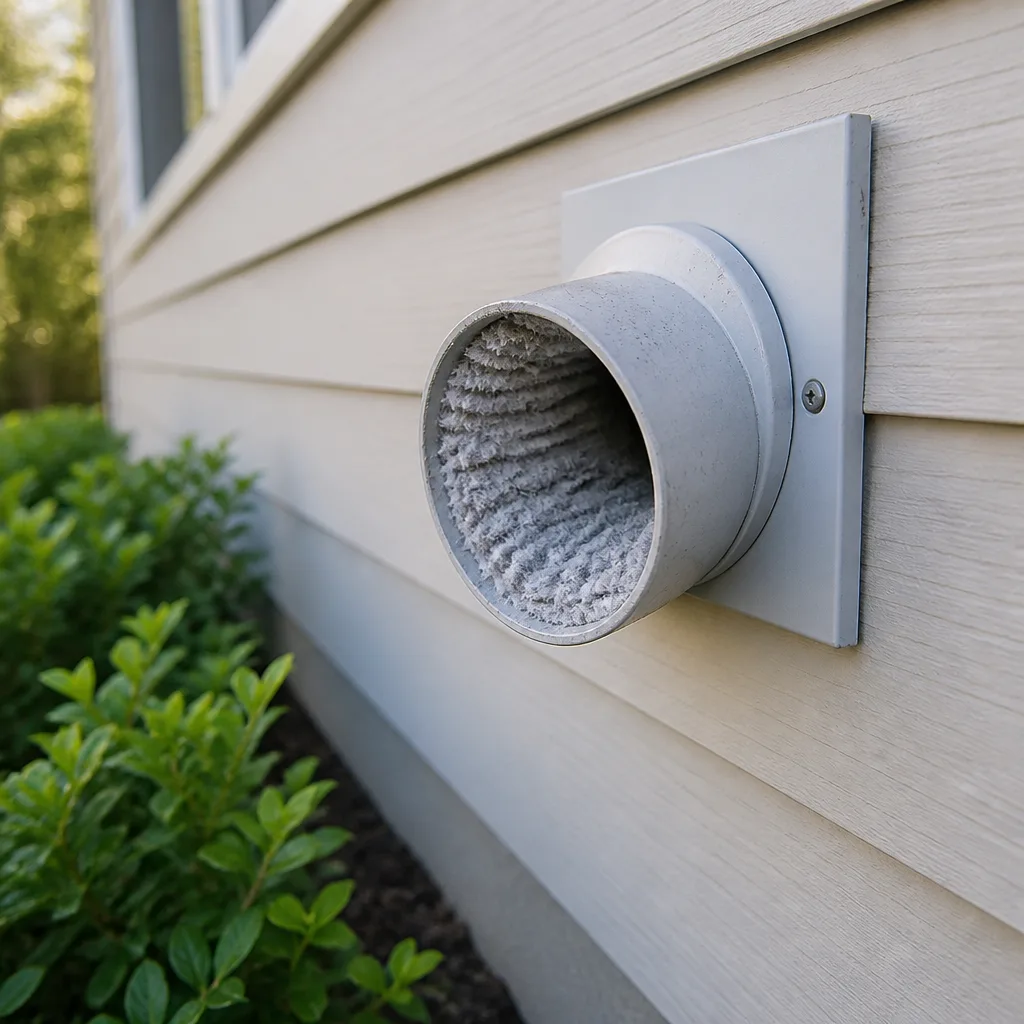 Dryer vent cleaning
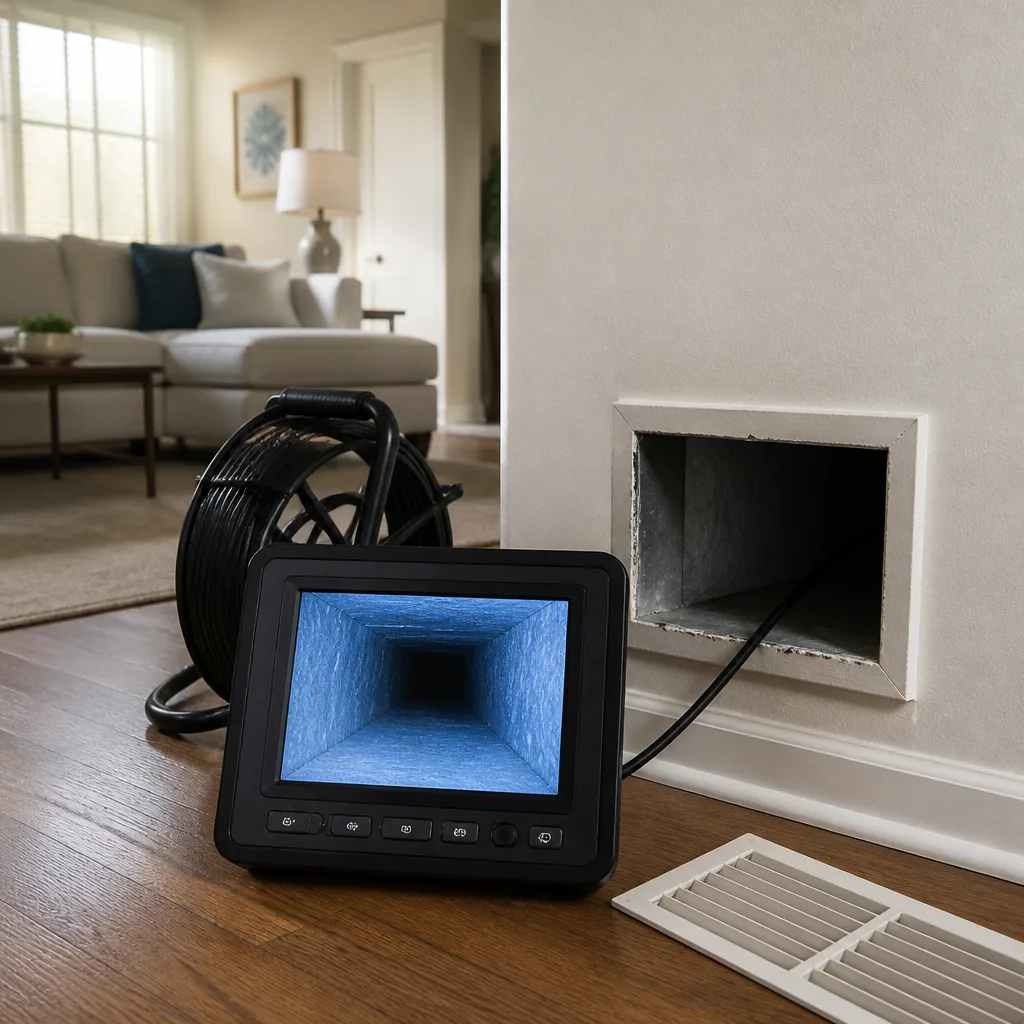 Camera inspection
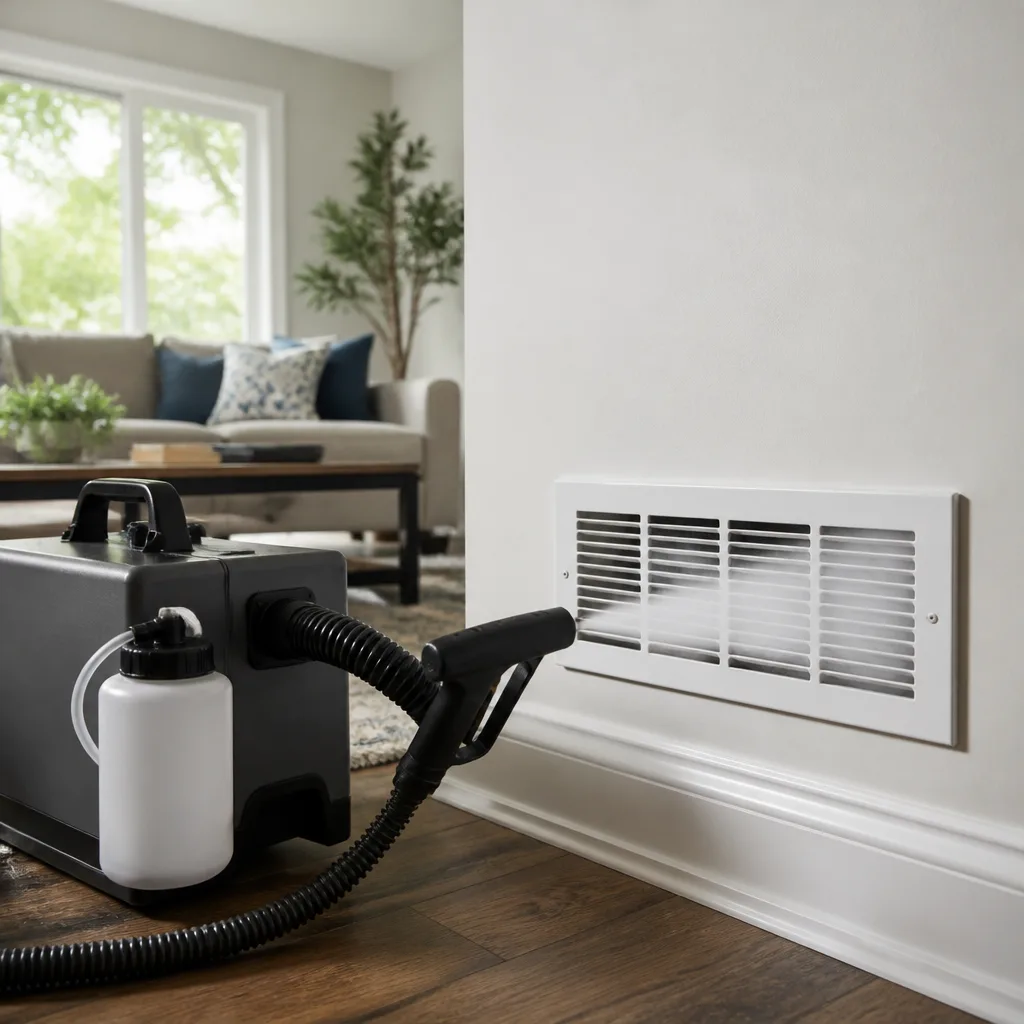 Sanitizing & deodorizing
Whole-system duct and dryer vent check with before-and-after photos - you see exactly what came out of your vents
That "$99 whole-house special" is a bait ad - the real number appears once they are in your hallway, or the "clean" is a shop-vac at the register. We photograph the inside of your ducts before and after instead.
Seasonal Air Duct Cleaning Care for Mission Viejo: Year-Round Homeowner’s Guide
Most air duct cleaning advice travels badly to Mission Viejo. The national script says clean every three to five years, change the filter monthly, and get on with your life. That schedule assumes a four-season climate with a hard winter and a wet spring. We don’t have that. A single strong Santa Ana wind event can push more particulate through a leaky duct system in three days than three years of ordinary operation would, and no generic calendar accounts for it. In this guide we map the real seasonal pressures here – wind events, wildfire smoke, marine layer humidity, and a compressed cooling season – to a month-by-month plan you can actually run.
Quick Answer
In Mission Viejo, air ducts need attention tied to local events rather than a fixed yearly interval. The core rhythm is: tighten and inspect before Santa Ana wind season (October), protect and re-check through the smoke-prone window, run a pre-summer check on the air handler and registers, and watch flex duct and attic moisture through the humid marine layer months. A whole-system cleaning is best timed after any heavy smoke or wind event, not on a blind calendar.
Styles & brands we work with
- Whole-home duct cleaning
- Dryer vent cleaning
- Camera inspection
- Sanitizing & deodorizing
Table of Contents
- Why National Cleaning Schedules Miss Mission Viejo
- Santa Ana Wind Season: Duct Infiltration and Filter Loading
- Wildfire Smoke and Fine Ash: What Vacuuming Won’t Fix
- Pre-Summer AC Startup Protocol
- Marine Layer Months: Attic Humidity and Flex Duct
- The 12-Month Mission Viejo Duct Care Calendar
- What You Can Check Yourself Safely
- Common Mistakes to Avoid
Why National Cleaning Schedules Miss Mission Viejo
Air duct cleaning advice written for the rest of the country assumes your HVAC system gets a seasonal break. In much of the U.S., the heating season and cooling season are distinct, and ducts sit relatively idle in between. Mission Viejo doesn’t give you that break. Cooling demand starts early and stays long, and the air moving through your ducts carries whatever is in the air outside. That means your system accumulates load continuously through the warm months rather than in concentrated bursts.
Layer on top of that the local air quality patterns. Santa Ana winds pull dry, dust-laden air off the interior and push it through the region, usually with a sharp drop in humidity. Wildfire smoke windows can drop fine ash over neighborhoods across the south county. The marine layer brings weeks of cool, humid morning air. Each of these affects a duct system differently, and each leaves its own signature inside the ducts and at the air handler.
This is where generalist advice falls short. A calendar-based “every few years” schedule treats all dust the same. In practice, the dust that settles after a wind event is mineral and abrasive, the ash after a fire is fine and clings to surfaces, and the moisture from humid air creates a different problem entirely.
What we look for when we inspect a system in Mission Viejo is the story of what the ducts have been through, not just how much has built up. That’s the same approach behind our air duct cleaning work – we assess the system’s actual condition before recommending anything. Professional-grade equipment matters here because consumer tools can’t move air the way a full system cleaning requires.
Santa Ana Wind Season: Duct Infiltration and Filter Loading
Santa Ana wind events typically arrive between October and February, and they are the single biggest seasonal factor in how much particulate reaches your ducts. The winds are dry and strong, and they lift fine dust and lofted debris into the air across the region. When a duct system has even small leaks at joints, boots, or return plenums, those winds push material inward. A return duct under negative pressure acts like a vacuum on a windy day.
The practical effect is filter loading. Your filter catches what it can, but a filter that’s already partway loaded can’t keep up during a wind event, and some of what gets past it lands inside the ducts and on the cooling coil. When we open a system after a heavy wind season, we often find a visible film of fine dust on duct lining and coil surfaces, particularly on the return side.
What to do before and during wind season
- Inspect and seal leaks before October. Check accessible duct joints, especially at the air handler and in the attic, and have gaps sealed. A sealed duct system keeps wind-driven dust out.
- Replace the filter right before the season. A fresh filter going into wind season catches more than a loaded one.
- Watch your filter during events. If you can see the filter loading quickly during a wind event, it’s doing its job – plan to replace it once the wind subsides.
- Note any dust plumes at registers. Dust blowing out of supply registers during a wind event suggests a leak on the return side pulling air in.
Sealing is the underrated part of this. A cleaning without sealing just means the system fills back up next wind season. Our HVAC cleaning work includes sealing and repair for exactly this reason – the two go together. If you’re not sure whether your system has leaks, a free estimate will tell you.
Wildfire Smoke and Fine Ash: What Vacuuming Won’t Fix
Wildfire smoke events are a recurring feature of the calendar in this part of Southern California, and they leave fine ash that behaves differently from ordinary dust. Smoke particulate is small enough to pass through many filters, and the fine ash that settles inside ducts clings to surfaces and can coat the cooling coil. That ash is also mildly alkaline and, over time, can pit or degrade duct lining and coil fins.
Here’s the part most homeowners miss: a standard vacuum pass doesn’t remove ash that’s bonded to a coil or settled into the folds of flex duct. Removing it takes controlled airflow, containment, and the right tools. When we work with Abatement Technologies filtration and containment equipment, it’s so that dislodged ash doesn’t just move into the living space or get redistributed through the system. Contamination control is the point.
Assessing your system after a regional fire
- Check your filters first. A gray or black coating on the filter tells you ash reached the system.
- Look at the cooling coil. If you can see the coil (often behind the access panel), a dull film or visible dust on the fins means ash has collected there.
- Smell the registers. A persistent smoky or musty odor at supply registers after the air clears outside can indicate ash and residue trapped in the system.
- Look for disturbed insulation. Ash can settle into insulation in the air handler cabinet and attic ducts, where it holds odors.
If you’ve been through a significant smoke event, a whole-system cleaning is worth scheduling once conditions have settled, followed by sanitizing if odor lingers. Avoiding the cleaning only means the residue keeps moving through the air you breathe. We can assess the system and recommend the right scope – and we show you what we find before we start and after we finish.
Pre-Summer AC Startup Protocol
The cooling season here compresses what other regions spread across months; heavy use begins early and stays steady. The pre-summer check is where you prevent small problems from becoming July breakdowns. This is not a full DIY job – the inside of the air handler is where trained technicians with the right tools earn their keep. What you can do safely is the checklist below.
What to check at the air handler and registers
- Replace the filter before the first heavy-use week. A clean filter at the start of the season sets the baseline.
- Check for visible dust at supply registers. Streaks or dust shadows around register grilles suggest leakage at the boot.
- Listen for whistling or hissing. Leaks at joints make noise under pressure; note where you hear it.
- Look for condensation or water staining near the air handler. Moisture near the unit is a flag for the technician.
- Check the return grille. A heavily loaded return filter starves the system and strains the blower.
- Book a professional system check. A trained eye can spot coil fouling, blower debris, and duct problems you can’t see.
Why does this matter before summer? Because a system starting the season with a fouled coil and a loaded filter runs less efficiently and works harder all summer. Our technicians have up to 11 years of experience reading exactly these signs, and a free estimate before the season is a low-cost way to catch problems early. Call (877) 883-1452 when you’re ready to schedule.
Marine Layer Months: Attic Humidity and Flex Duct
The marine layer is one of the most overlooked seasonal factors for Mission Viejo duct systems. Through the cooler months, humid morning air rolls in from the coast and lingers before burning off. For homes with ducts run through the attic, that humidity matters. Attic spaces can be poorly ventilated, and when cool, humid air meets warm duct surfaces or collects in low spots in flex duct, condensation can form.
Condensation inside a flex duct run creates the conditions for mold germination – not because the ducts get wet in a dramatic way, but because moisture lingers on a surface that stays damp. In our experience, attic flex duct that runs through poorly insulated or poorly ventilated spaces is where we see the most moisture-related problems. The tell-tale signs are a musty smell that comes and goes with the weather, or visible condensation at a duct connection.
What to watch for during the marine layer months
- Musty odors that appear on humid mornings and fade by afternoon
- Condensation or water stains at flex duct joints or near the air handler
- Visible discoloration or dark spotting on duct lining
- Attic ventilation problems – blocked soffit vents, poor airflow
If you see or smell any of these, don’t wait for the symptoms to worsen. A duct inspection can confirm whether moisture is the issue and whether cleaning, sealing, or repair is needed. Our approach pairs cleaning with repair and sealing for exactly this reason; addressing one without the other leaves the root cause in place.
The 12-Month Mission Viejo Duct Care Calendar
Here’s the year mapped to local conditions rather than national averages. Each month below tells you what to check and what to schedule.
October through February: Santa Ana wind season
- Before October: Inspect and seal duct leaks; replace the filter.
- During wind events: Check the filter for rapid loading; watch for dust at registers; note leaks.
- After wind season: Schedule a system inspection if dust or leakage signs appeared.
Any time: wildfire smoke window
- During: Keep windows closed and note whether smoke odor reaches the registers.
- After: Assess for ash on the filter, coil, and duct surfaces; schedule a cleaning and sanitizing if needed.
March through May: pre-summer
- Early spring: Replace the filter; run the pre-summer checklist at the air handler and registers.
- Late spring: Book a professional system check before the first heavy cooling week.
June through September: high-use cooling season
- Monthly: Check the filter and replace it as it loads.
- Mid-season: Look for dust at registers and note any musty smells that appear, especially on humid mornings.
- Late summer: Assess whether a cleaning is due before the cooler months return.
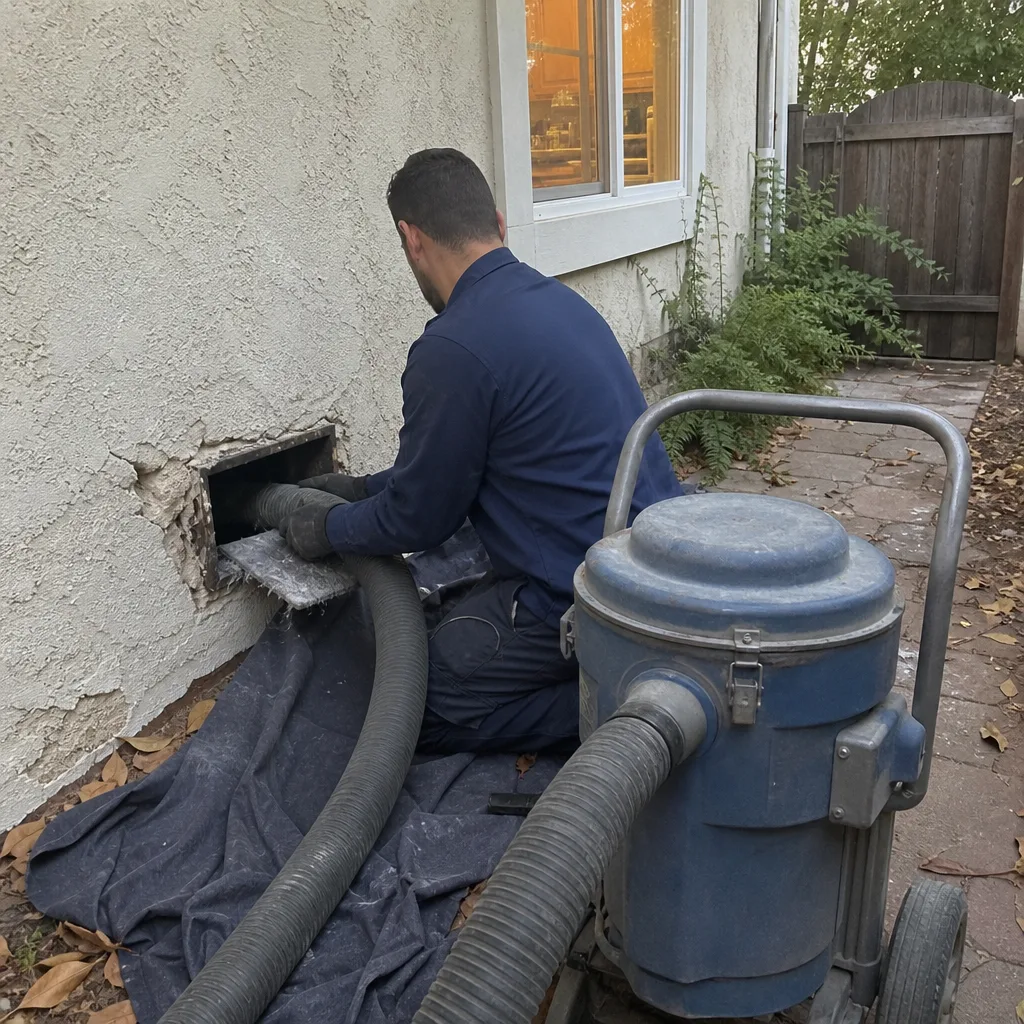
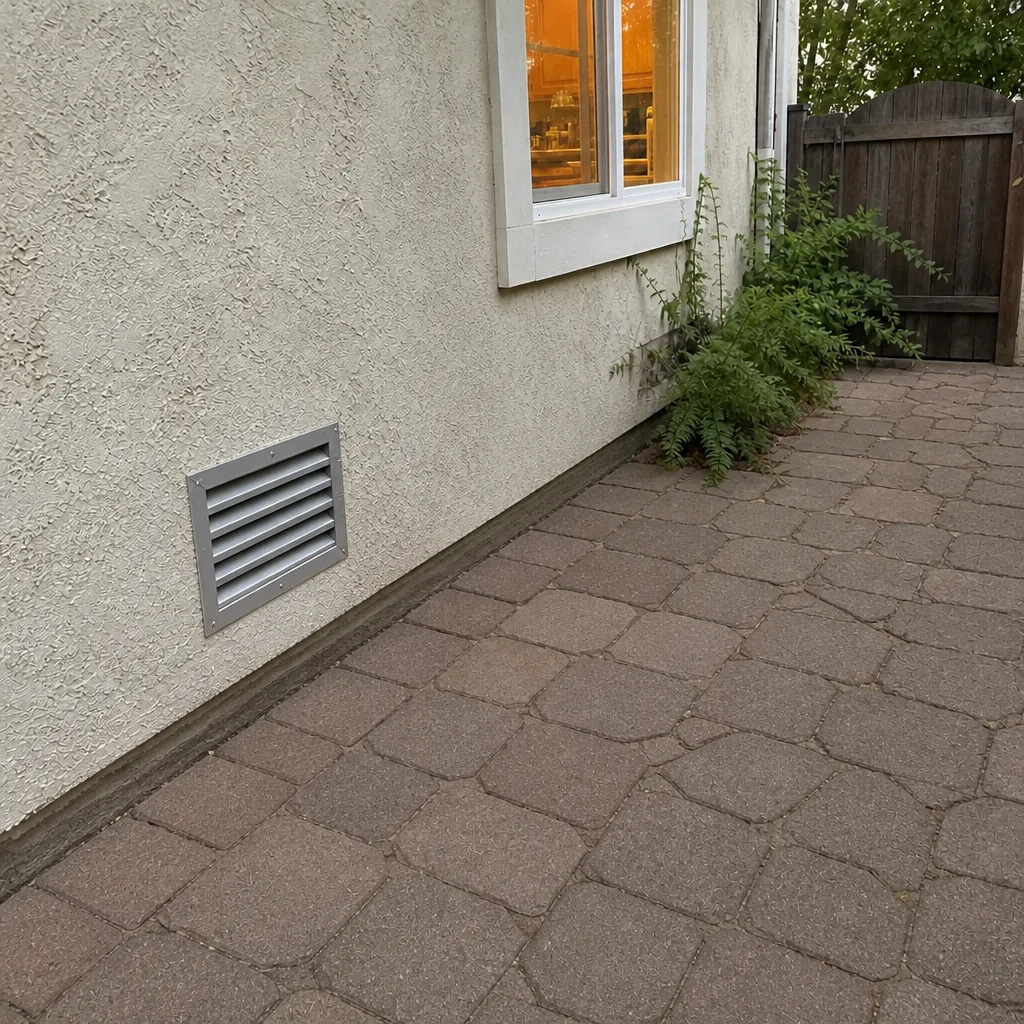
A dryer vent check fits anywhere in this calendar, but the safety one belongs here year-round. Lint buildup in a dryer vent is a leading household fire risk, and it’s why we treat dryer vent cleaning as a standalone service, not an upsell. A dryer taking longer than it used to is often the first sign. We handle it alongside the HVAC work so you’re not juggling multiple vendors for the same page of your home’s maintenance record.
What You Can Check Yourself Safely
Some things you can safely inspect yourself, and some you shouldn’t touch. Know the line. On the safe side: filters, register grilles, visible duct connections in the attic, and the outside of the air handler cabinet. Everything past that – the inside of the air handler, the cooling coil, electrical components, and gas connections – is work for a trained technician. This is a safety rule, not a sales tactic.
- Filters: Check and replace them yourself; this is the single most important routine step.
- Registers: Look for dust streaks and listen for whistling.
- Visible duct joints: Note gaps or disconnected joints for a technician.
- Attic duct runs: Look for condensation and dark spotting.
- Air handler exterior: Note moisture, staining, or unusual noise.
Don’t open the air handler cabinet, touch electrical components, or attempt to clean the cooling coil yourself. A trained professional knows how to remove ash from coil fins without bending them and how to avoid the electrical hazards inside the cabinet. If you find problems in your self-check, an inspection is the next step.
Common Mistakes to Avoid
- Following a generic “every 3-5 years” schedule. That interval ignores what a Santa Ana wind event or a smoke event actually does to your system. In Mission Viejo, event-driven cleaning is more useful than the calendar.
- Cleaning without sealing leaks. A cleaning that doesn’t address leaks leaves the system to refill next wind season. Sealing is half the job; skipping it means you’re back at square one.
- Assuming a light vacuum handles wildfire ash. Fine ash bonds to surfaces and coils and needs containment and proper tools to remove safely. A shop vac can spread contamination rather than remove it.
- Ignoring musty smells in the marine layer months. A musty odor that appears on humid mornings can signal moisture in attic flex duct. Waiting for it to “go away” lets mold conditions persist.
- Running the system with a heavily loaded filter. A loaded filter starves airflow and strains the blower. Replace it more often during wind and smoke events.
- Hiring the lowest-priced estimate without seeing the scope. A very low quote often means a surface pass with consumer tools rather than a full-system cleaning. Ask what equipment will be used and whether sealing is included.
- Neglecting the dryer vent. Many systems get cleaned for air quality while the dryer vent – a real fire risk – goes unchecked. Treat it as part of the annual routine.
See the difference
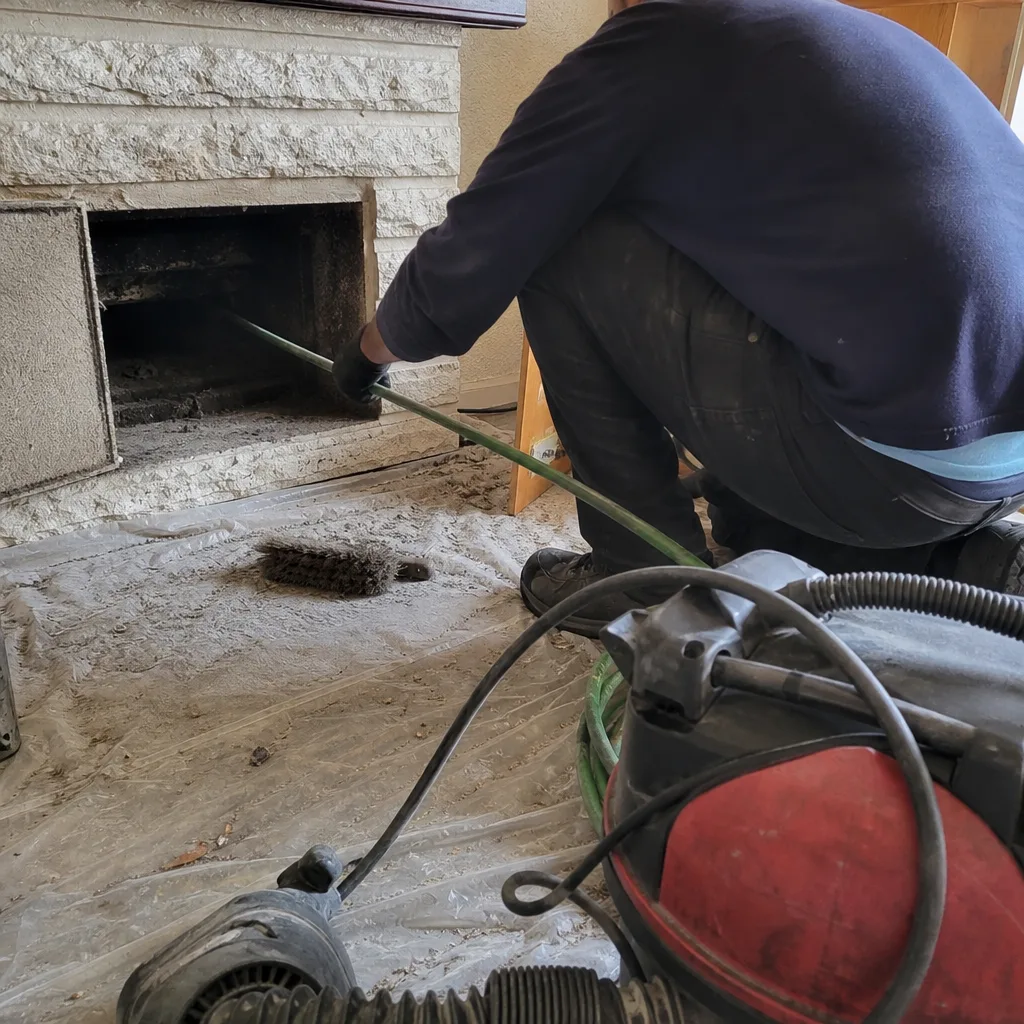 Before
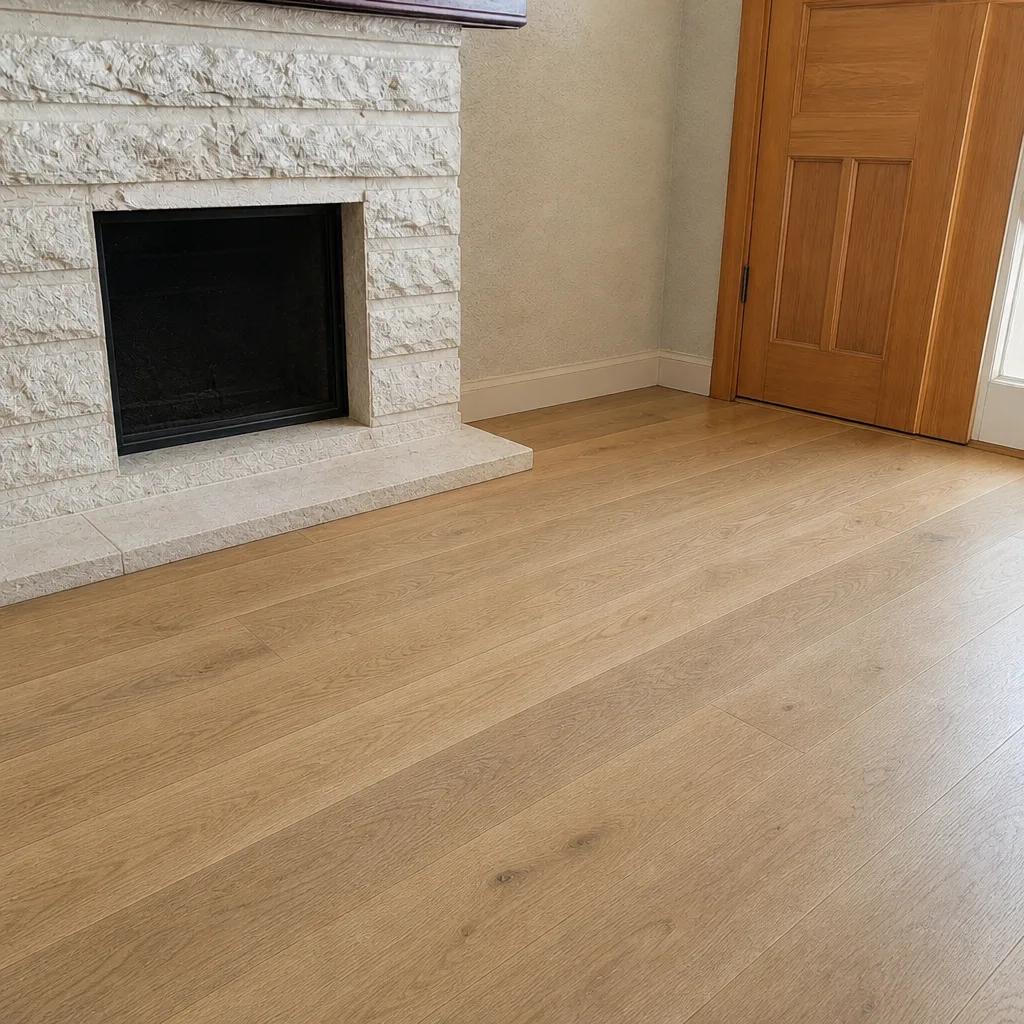 After
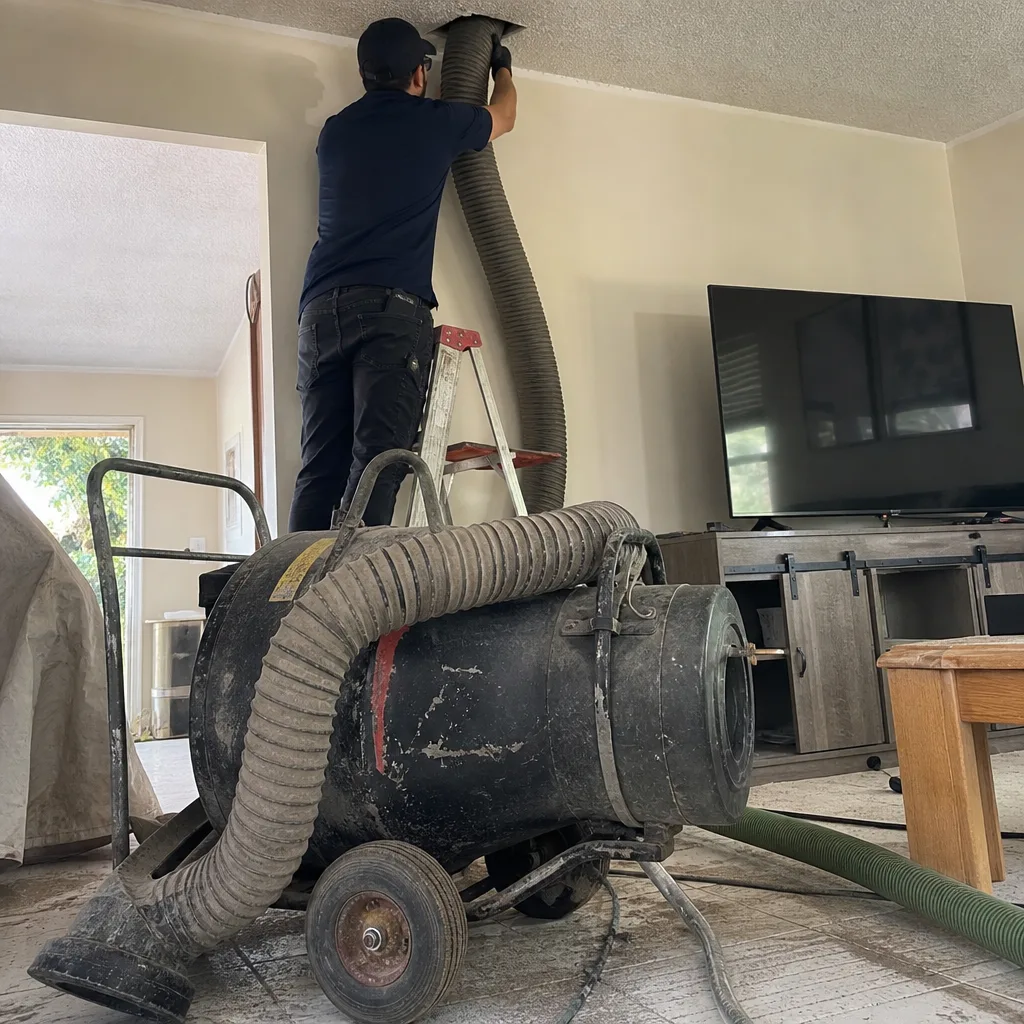 Before
 After
 Before
 After
When to Call a Professional
Some jobs are yours to handle; others belong with a trained professional. Call us when you’ve been through a significant Santa Ana wind or wildfire smoke event and your filters load fast or your registers smell smoky. Call when returning the system to service after any period, or when you’re buying a new home in Mission Viejo and don’t know the duct history. Call when you notice persistent musty odors, visible condensation at duct joints, or dust plumes at registers. Call when your dryer takes longer than it used to. And call when you simply want an honest assessment of what’s in your system before you decide whether to clean. Mission Viejo Air Duct Cleaning Pros offers free estimates in Mission Viejo – call (877) 883-1452. We answer 24/7. Fast dispatch from 7am to 7pm, Sunday through Friday.
Frequently Asked Questions
In Mission Viejo, clean based on events, not a fixed interval. A whole-system cleaning is best scheduled after significant Santa Ana wind events or regional wildfire smoke episodes, or once you see dust plumes at registers, persistent odors, or rapid filter loading. For most homes that works out to attention more often than the three-to-five-year national average because the local air quality events come more frequently. Call (877) 883-1452 for an exact assessment – estimates are free.
Yes, and more than most homeowners expect. Santa Ana winds push dry, dust-laden air against every gap in a duct system. Leaks at joints and boots act as entry points, and return-side negative pressure pulls that material inward. The result is a fast rise in filter loading and fine dust on duct surfaces and the cooling coil. Sealing leaks before the season and replacing the filter are the two steps that limit it. Call (877) 883-1452 to schedule a leak assessment.
Check the filter first – a gray or black coating tells you ash reached the system. Look for a film on the cooling coil (if accessible) and note any smoke odor at the registers. If ash got inside, a whole-system cleaning with containment and proper equipment is the only thing that removes it, and sanitizing follows if odor persists. A standard vacuum won’t fix bonded ash. Call (877) 883-1452 for a free estimate once the air clears.
Musty odors that appear on humid mornings usually point to moisture in attic flex duct. When the marine layer brings humid air and attic ventilation is poor, condensation can form on duct surfaces and linger, creating the conditions for mold. A duct inspection can confirm whether moisture is the cause and whether cleaning, sealing, or repair is needed. Don’t wait for the smell to worsen. Call (877) 883-1452 for an inspection.
Professional-grade equipment, not big-box tools, is what makes a full-system cleaning thorough. We use Rotobrush and Nikro systems – the same equipment trusted in commercial applications – and Abatement Technologies filtration and containment to keep dislodged material from spreading through your home during the job. On the air-quality side, we work with Honeywell and Aprilaire products and Guardsman-line treatments for post-cleaning protection. Equipment scope and process are fair questions to ask any company before hiring. Call (877) 883-1452 with yours.
Ask to see before-and-after photos of your own system, and ask what equipment will be used and whether sealing is included in the scope. A low quote that uses consumer tools and skips containment is a tell. A transparent company will show you what they find before they start and after they finish. Call (877) 883-1452 for a free estimate and a clear scope of what your system needs.
The Bottom Line
Mission Viejo’s climate doesn’t follow the four-season pattern most duct cleaning guides assume. Santa Ana wind events, wildfire smoke, marine layer humidity, and a long cooling season each put specific pressure on your duct system. The right approach is event-driven rather than calendar-driven: seal leaks before wind season, protect and assess through smoke windows, run a pre-summer check, and watch for moisture during the humid months. Cleaning, sealing, repair, and air quality work together, not as separate tasks. When you need an honest assessment, call (877) 883-1452. We answer 24/7. Fast dispatch from 7am to 7pm, Sunday through Friday. Free estimates.
Written by the team at Mission Viejo Air Duct Cleaning Pros.